





Fukushima Nuclear Accident: A Warning for Jaitapur
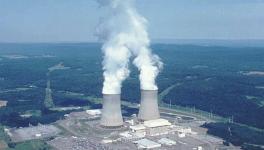
As I write these lines, it appears that Japan’s Fukushima Daiichi plant is moving towards a core meltdown as it has lost control of the cooling system. An explosion has blown the wall of one of the buildings there and radioactive iodine and caesium has been vented from the plant. The Fukushima Daini plant, about 10 km from the Daiichi plant, is also moving in the same direction with a similar loss of control of the cooling system, but without release of radio activity as yet. Both these plants belong to Tokyo Electric Power Company (TEPCO).
The Fukushima Daichi plant has 6 reactors of which 3 were out for normal inspections before the earthquake. Three running reactors are 460 MW (Unit 1) and 784 MW (Units 2&3) and are about 35 years old. Once the earthquake hit Japan, the three running units were tripped safely. However, with the units going off-grid due to grid failure, the only power available for safety system operations was the emergency diesel generating sets and battery power. The tsunami which hit the plant one hour after the earthquake seems to have taken out the emergency DG sets, he only power now available in the plant is battery power.
Once a reactor is shut down, the fuel rods still generate heat and must be cooled. This is where the problem in both these plants started – in both plants the cooling pumps seemed to have lost power. The battery power allows valves and controls to operate for another 8 hours after which all controls of the plant would be lost. Once the cooling power is lost, the nightmare scenario of a meltdown starts.
The Japanese authorities have declared a nuclear emergency in both these plants – the first time that such an emergency has been declared in Japan. In the Daiichi plant, the evacuation radius was initially 3 km and then expanded to 10 km and now to 20 km. More than 46,000 people have been evacuated from the Daiichi plant area, and another 100,000 people may have to be evacuated now. The Daini plant, which has 4 reactors, has also declared a nuclear emergency and evacuation is under way in a 3 km radius.
What is happening currently is that due to heat build-up within the reactor, steam is being vented out periodically. This means radioactive material is being released, first in the containment building and later reaching outside the plant. But the explosion makes clear that controlled release did not succeed or at some point there was not enough coolant left in the reactor core. This would explain the explosion, which Fukushima prefecture now says has blown the roof of the reactor has collapsed. TV and press reports indicate that the outer walls of the reactor building has also been blown off.
All this brings out the nightmare scenario of a complete core meltdown. As the fuel rods continue to heat up, they will melt at some point, first the metal cladding of the ceramic encased fuel pellets, then the ceramic pellets themselves. At this point, the containment vessel should hold the radioactive release, however already this is a huge disaster. Managing this is a complex operation for the future. The key issue, will the containment hold. The explosion in the reactor building might well be that it has not. The explosion seems to have been caused by hydrogen accumulation inside the containment building. Has it breached the containment building is yet not known. The final disaster is if the molten fuel rods go through the floor of the containment building, in which case it would explode in a mass of steam and radioactive material. This has never happened till date is an extremely unlikely scenario. This was the theme of the film, The China Syndrome.
The conditions in the Daini plant is currently better, but it still is in a critical state. In both these plants, coolant is being injected manually to maintain the coolant levels.
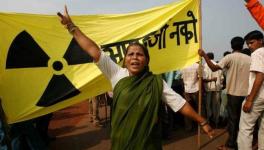
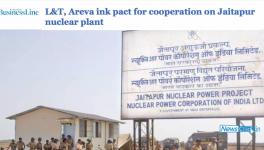
The accident shows that nuclear plants need to have a number of fail safe devices and layers of protection. In this context, should India be looking at untested and untried designs of the Jaitapur type needs to be seriously examined. Fukushima has posed serious questions already to the nuclear industry and only the foolhardy would rush in with completely unknown designs that Areva is pushing on India.
Get the latest reports & analysis with people's perspective on Protests, movements & deep analytical videos, discussions of the current affairs in your Telegram app. Subscribe to NewsClick's Telegram channel & get Real-Time updates on stories, as they get published on our website.