





Bengal: Encounter Casts Shadow over Baruipur Rape and Murder Case
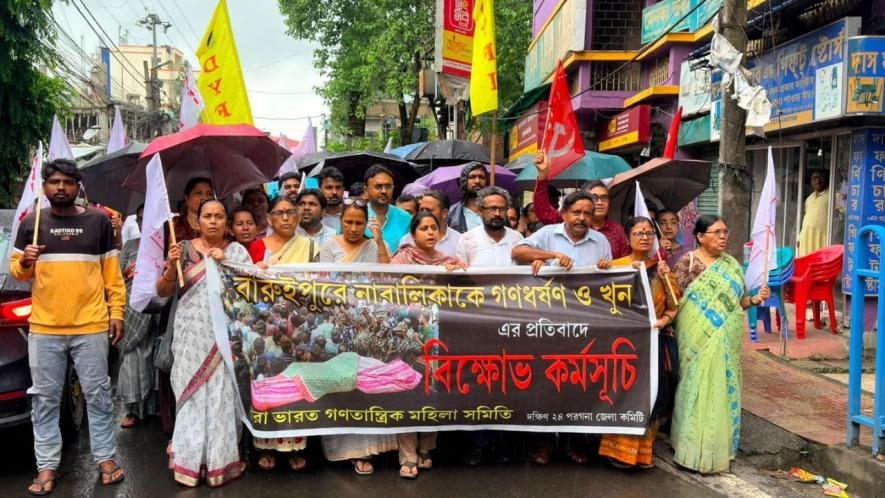
The death of Prabhas Mondal, one of the key accused in the rape and murder of a minor girl at Suryapur in Baruipur, South 24 Parganas, in a police encounter shortly after midnight on July 8, has triggered intense debate across West Bengal.
The incident came barely 12 hours after Chief Minister Subhendu Adhikari visited the office of Baruipur Superintendent of police, delivered a strong message on maintaining law and order, and warned political opponents. The timing of the encounter has drawn widespread public attention.
Beyond the ongoing criminal investigation, the encounter has raised a larger and more troubling question: Was the shooting, as the police claim, an act of self-defence, or was it an extrajudicial action that permanently silenced a crucial accused who could have provided important evidence during the investigation?
The incident has also revived memories of a painful chapter in West Bengal’s history. Many observers have noted that police encounter killings had largely disappeared from the state for nearly six decades. Following the Baruipur shooting, social media has been flooded with comparisons to the 1970s, when, during the crackdown on the Naxalite movement, numerous alleged militants were killed in controversial police encounters under the then Congress government. Critics argue that the latest incident bears disturbing similarities to those earlier episodes, while supporters maintain that the police acted within the law. As the investigation progresses, the encounter is likely to face close legal and public scrutiny, with questions centring not only on the circumstances of the shooting but also on whether due process was fully observed.
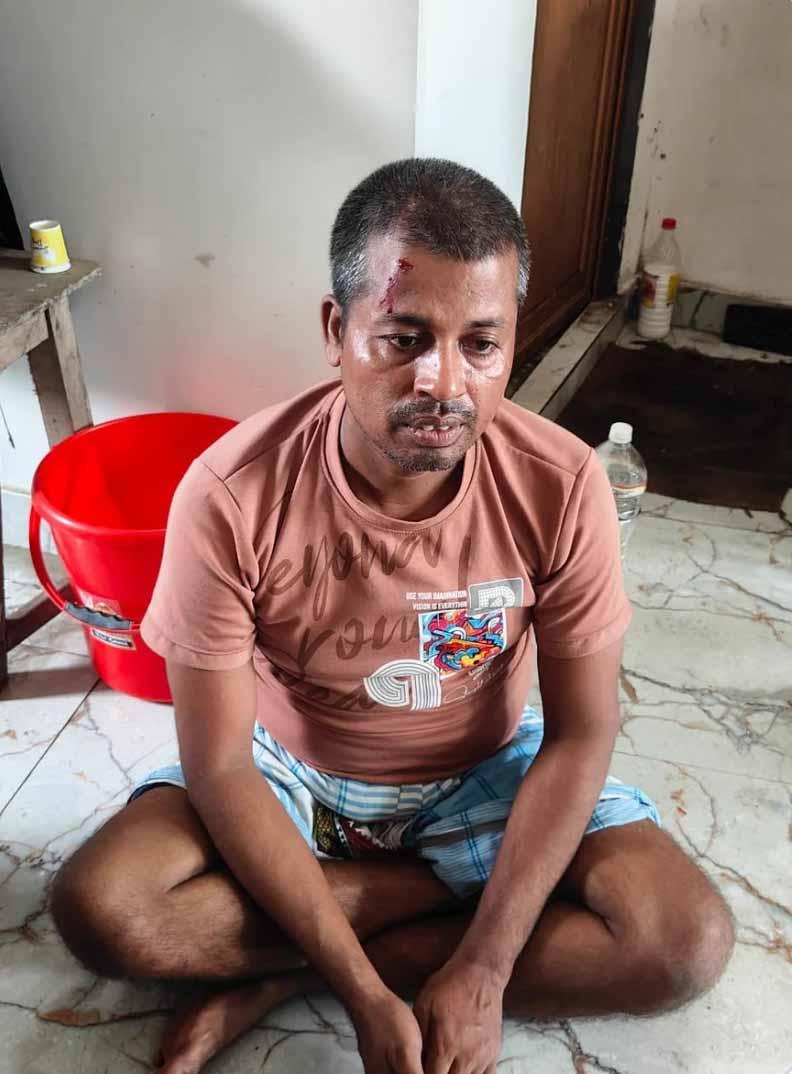
What Really Happened in Suryapur Village?
An 11-year-old girl left her home last on 4 July afternoon to purchase a birthday gift for a friend. She never came back home. According to CCTV evidence and subsequent findings, she was last seen with a local youth named Prabhas Mondal alias Guli. After searching at several places, anxious family members approached the local police outpost at around 8 PM to file a missing person’s diary report. The family explicitly alleges that despite lodging the complaint, the police administration showed lack of urgency and failed to initiate an immediate search operation. Following the discovery, CCTV footage from the locality was analysed, confirming that the victim girl was last seen with Prabhas Mondal. Acting on this evidence, locals and authorities picked up Prabhas from his residence at midnight. Upon interrogation in front of the villagers, Prabhas confessed to the crime. He led the villagers to the specific spot at the pond where the body had been submerged. The accused confessed that the minor was sexually assaulted before being murdered, packed into a sack, and thrown into the pond. Furthermore, he revealed the involvement of three other accomplices and disclosed their identities to the villagers. He said that Ananda Sardar was the mastermind behind the heinous crime while Dibakar Sardar and Kabir Molla were also involved.
Under intense pressure from the villagers, Prabhas led them to a pond beside a club in the Nachhongachha area of the village. From there, the body of the minor girl was recovered from inside a plastic sack. The upper part of her body bore multiple injuries and bite marks. The schoolgirl was allegedly subjected to prolonged torture by the accused who were reportedly indicated raped her multiple times. According to Prabhas Mondal’s statement, after the alleged assault, the minor was struck with a heavy object and stuffed into a sack of rice before being thrown into the pond. However, the post-mortem report raises a crucial question. It found that water had entered the girl’s lungs. This suggests that the minor was still alive at the time she was dumped into the pond.
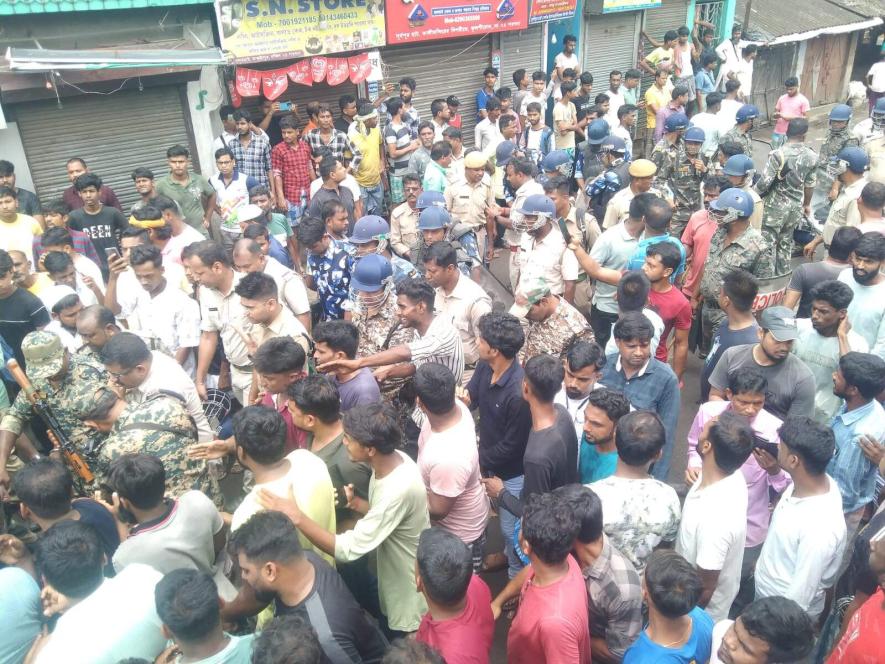
The recovery of the minor girl’s body triggered widespread outrage across Baruipur. Protest marches demanding exemplary punishment for those responsible were organised across West Bengal by the Communist Party of India (Marxist) (CPI(M)). In Baruipur, violent clashes broke out between the police and local people, during which several police vehicles were vandalised.
Amid the public fury, a youth Indrajit Tanti (26) lost his life. Local residents alleged that he had been involved in the crime. However, several people told this reporter that the primary reason behind the intense public anger was the allegation that the main accused, Ananda Sardar, had been released shortly after his arrest following the intervention of local BJP leader Santanu Mondal.
“Santanu Mondal is a BJP leader, Ananda is also associated with the BJP. We heard that Santanu brought Ananda out of police custody. We also heard that the police had arrested Santanu” said Kartik Sardar, a resident of the village. However, Santanu Mondal was never arrested.
A local BJP activist, speaking on condition of anonymity, said that Santanu had spent the entire day searching for the missing girl. When asked why, then, he allegedly intervened to secure Ananda Sardar’s release, the BJP activist replied, “Santanu is a BJP leader. He is effectively part of the administration!”
Sensing the growing public outrage, Chief Minister Subhendu Adhikari spoke to the victim’s family on July 5, and visited their home on July 7. He assured the family that every person involved in the crime would face legal action. He stated that the victim’s family had told him they had placed their trust in the police administration. He further said that he has directed the State’s Director General of Police (DGP) to submit a report within 72 hours examining whether there was any negligence on the part of the police in their efforts to trace the missing minor girl. He stated that if the inquiry establishes any lapse or dereliction of duty, those responsible will also face legal action in accordance with the law. At the same time, he stated that Indrajit Tanti was innocent; he had been lynched by enraged mob. The Chief Minister further announced that around 200 people who allegedly took part in the violence had been identified and would face legal action. So far, the police have arrested 20 people in connection with the case.
Chief Minister also alleged that opposition parties and some social media and radical platforms had incited the unrest. Soon after his statement, police complaints were filed against several leaders, including CPI(M) central committee member Sujan Chakrobarty and other left activists, who had visited the victim’s family and expressed solidarity with them. Commenting on the development, Sujan Chakrobarty said, “This only reflects the BJP’s sense of frustration”
Official Encounter Narrative Questioned
The arrest of the three other accused was based on information provided by Prabhas Mondal. All four accused were in police custody, and the investigation was progressing.
Against this backdrop, the death of one of the key accused has raised serious questions about the direction of the investigation. Several lawyers, human rights activists and observers have questioned how the custodial death of a principal accused could affect the pursuit of the truth and the prosecution of the case. They argue that the incident has shifted the focus from a judicial process to allegations of an extrajudicial killing, raising concerns over whether the accused was denied the opportunity to stand trial before a court of law.
The biggest question surrounding the encounter is this: Had Prabhas Mondal remained alive, could he have revealed information that might have significantly widened the scope of investigation?
Was the case limited to rape and murder, or did it point to a larger network involving the trafficking of women? Investigations and legal observers have questioned whether the probe was beginning to uncover possible links to abduction, human trafficking, local criminal syndicates, or even the involvement of politically or administratively influential individuals. These questions have gained renewed significance following the death of the key accused. However, the police have so far offered no explanation on whether any of these angles were being investigated or whether Prabhas Mondal’s custodial death has affected the course of the probe.
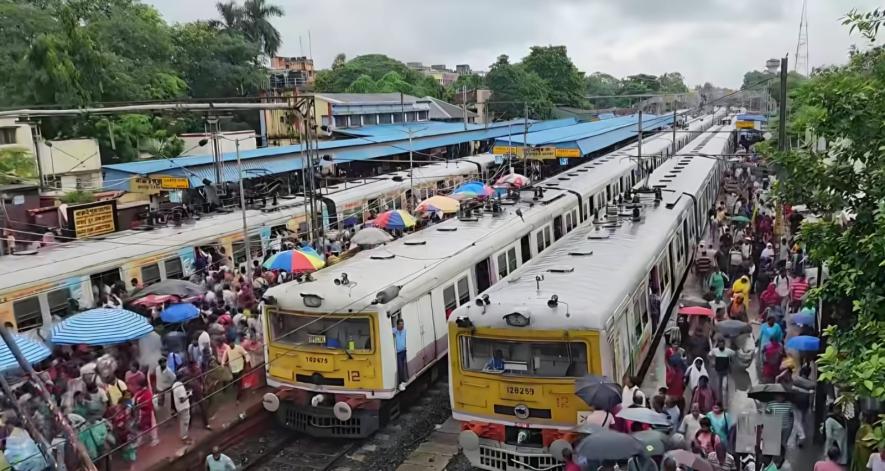
According to the police, Prabhas Mondal was taken out of Baruipur Police Station at around 11:30 pm on July 7, and escorted to the crime scene for a reconstruction of the incident. Among those present were Roni Sarkar, Circle- in-Charge of Canning Police circle, Argha Mondal, Circle-in-Charge of Baruipur Police circle and a member of Special investigation team (SIT), along with several other police officers. The reconstruction was carried out after crossing the railway tracks near Suryapur station and entering a marshy shrub-covered area.
The official police account states that at around 12.45 am of July 8, Prabhas Mondal suddenly snatched Circle Inspector Rani Sarkar’s service revolver from his waist, attempted to flee, and fired a round at the police. In response, Argha Mondal allegedly opened fire. Two bullets struck Prabhas Mondal. He was rushed to Baruipur Hospital, where doctors declared him dead.
However, it is this official version of events that has triggered a series of troubling questions.
Why would a suspect in police custody attempt to escape through muddy marshland in the middle of the night while surrounded by a large contingent of armed police personnel? Was he not physically restrained, as is standard practice during the movement of a high-risk accused? How was he able to seize a police officer’s service revolver? Was the weapon not secured? Even if he had managed to snatch it, did he realistically have any chance of escaping after allegedly firing at officers in such circumstances? The incident has raised further questions over police procedure. If taking the accused to the spot was essential for the investigation, how did such a serious security laps allegedly occur?
Investigators say Prabhas Mondal was not an insignificant suspect. He had a criminal record, with previous cases registered against him, including allegations of molestation and offences under the Arms Act. Investigating sources also claim that CCTV footage, mobile tower location data and call detail records placed him at or near the crime scene on the day of the incident.
His death has therefore intensified a central question: why did a key accused – someone who could have testified during trial and potentially shed light on the wider criminal network behind the crime – die before the judicial process could unfold?
According to the investigation, it was Prabhas Mondal who allegedly lured the minor to the crime scene; investigators believe he was promised Rs 10,000 in return. If that is true, the case may extend beyond a crime driven solely by sexual violence. It raises the possibility that the victim was abducted under a premeditated plan in exchange for money.
During interrogation, investigators say Prabhas mentioned a man identified only as “Raja”. Who is Raja, and what was his role? That question remains unanswered.
A judicial inquiry into the encounter has already begun, as required under procedure. But as that inquiry progresses, one fundamental question is likely to persist: was the death of Prabhas Mondal truly unavoidable, or did the investigation lose a crucial witness before the full facts could emerge?
At the heart of the debate lies a broader principle. In a criminal justice system governed by the role of law, both the victim and accused are entitled to due process and a fair judicial determination of the facts. Why that process could not run its full course in this case remains a question that continues to be asked. Whether the judicial inquiry will ultimately provide those answers is something that only time will tell.
The writer is a freelance journalist based in West Bengal.
Get the latest reports & analysis with people's perspective on Protests, movements & deep analytical videos, discussions of the current affairs in your Telegram app. Subscribe to NewsClick's Telegram channel & get Real-Time updates on stories, as they get published on our website.