





Bengal Poll Verdict and Limits of Analogy
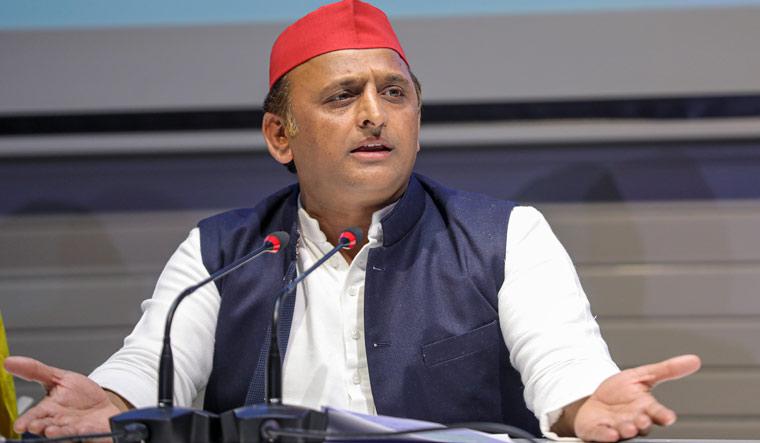
Image courtesy: PTI
The results declared on May 4 from West Bengal did not merely unsettle India's political establishment; they rewrote it. Exit polls had anticipated a Bharatiya Janata Party (BJP) advance, but the scale of what followed was something else entirely. The party secured a historic 206 seats, dismantling the Trinamool Congress's (TMC) 15-year dominance in a single evening. Most strikingly, Chief Minister Mamata Banerjee lost her Bhabanipur stronghold to Suvendu Adhikari of BJP by 15,105 votes, a margin as symbolic as it was decisive.
For BJP, Bengal had always been the most coveted prize, the one conquest that had eluded it despite successive attempts. The breakthrough eclipsed the party's comfortable hat-trick in Assam and cast a long shadow over the verdicts elsewhere: TVK's sweeping triumph in Tamil Nadu, the UDF's measured return in Kerala.
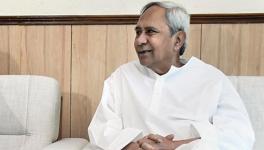
A familiar pattern has since crystallised across op-ed columns and television studios that regional strongmen, however deeply entrenched, repeatedly struggle against BJP's organisational machinery. Naveen Patnaik in Odisha. Tejashwi Yadav in Bihar. Arvind Kejriwal in Delhi. Now Mamata Banerjee in Bengal.
AICC (All India Congress Committee) secretary Shahnawaz Alam captured the prevailing mood: "The lesson for regional parties is clear. They cannot withstand BJP's might without the Congress." The question, barely concealing its urgency, has since turned westward toward Uttar Pradesh.
The speculation that has followed is vigorous -- divided between those who believe Bengal's verdict fundamentally reshapes the calculus ahead of UP's 2027 elections, and those who insist it changes nothing. Both camps risk the same foundational error: drawing straight lines between states whose political textures bear little resemblance to each other.
Context is everything. The Samajwadi Party (SP) does not carry the burden of incumbency; it has spent nearly a decade in opposition. The anti-incumbency that eroded the TMC's foundations, or the 'Jungle Raj' imagery that haunted Tejashwi Yadav in Bihar, finds no clean equivalent in UP's present landscape. The variables are different; the electorate is different; the moment is different. Uttar Pradesh, with its 403 constituencies stretching across vast and internally contradictory terrain, cannot be read through the prism of another state's verdict.
What that terrain increasingly reveals, to those who have travelled it closely, is the quietly growing stature of former Chief Minister Akhilesh Yadav, not merely among committed supporters, but measurably among his critics as well. Even those who question him tend to acknowledge his record: Metro corridors, laptop distribution, expressways, the women's helpline, the ambulance network. The 'Mafia Raj' charge, wielded by BJP with considerable consistency, appears to be receding from living memory on the ground. Whether it recedes far enough before 2027 is the defining question.
What is equally clear is that the issues Akhilesh Yadav has been raising are landing not as political rhetoric, but as a faithful reflection of difficulties people encounter daily. Farmers speak of delayed sugarcane payments, rising input costs, and unresolved irrigation failures.
Across the broader population, there is a shared weariness over climbing private school fees, healthcare costs, persistently high fuel prices, and the recent hike in commercial LPG rates. In cities, residents point to choking traffic and crumbling infrastructure. His focus on smart metre grievances has similarly gathered traction among those directly affected.
BJP supporters offer a contrasting account with equal confidence: free ration for the poor, subsidised LPG connections for below-poverty-line households, an expanded road network, and a firmly restored law and order.
The Bahujan Samaj Party or BSP, led by one of India's most consequential Dalit leaders, Mayawati, may no longer command the sweep it once did, but in a state where margins decide destinies, even a contained BSP can quietly bleed prospects in a handful of critical constituencies, denying either alliance the cushion it needs.
Equally watchful eyes will follow Chandrashekhar Ravan, whose appeal among young Dalits has grown with a momentum that few in the establishment saw coming. Whether he ultimately folds into the SP-Congress alliance or charts an independent course remains unresolved and that resolution, when it comes, will carry disproportionate weight in seats where Dalit consolidation is the difference between winning and losing.
Layered over this are questions the alliance itself has yet to answer: how seats are divided between the SP and the Congress without breeding internal resentment, and whether candidate selection reflects the coalition's stated ambitions or quietly surrenders to old hierarchies. Each of these decisions, taken together, will do as much to shape the final arithmetic as any campaign narrative either side constructs.
Layered over this are questions the alliance itself has yet to answer: how seats are divided between the SP and the Congress without breeding internal resentment, and whether candidate selection reflects the coalition's stated ambitions or quietly surrenders to old hierarchies.
Bengal has delivered its verdict. Uttar Pradesh 2027 will deliver its own; on its own terms, and no one else's.
The writer is a journalist based out of Lucknow, Uttar Pradesh, with over 100 published pieces across various groups. The views are personal.
Get the latest reports & analysis with people's perspective on Protests, movements & deep analytical videos, discussions of the current affairs in your Telegram app. Subscribe to NewsClick's Telegram channel & get Real-Time updates on stories, as they get published on our website.