






Have We Found a New Body Organ?
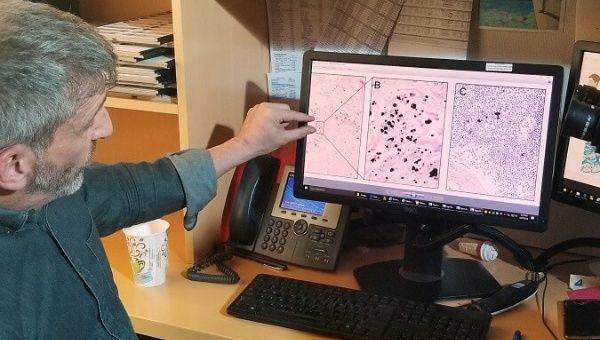
Courtesy: teleSur
While carrying out endoscopy using a new technique, Dr. David Carr-Locke and Dr. Petros Benias, from Mount Sinai-Beth Israel Medical Center in New York City, saw a tissue structure that was unlike anything seen before in the human body. This structure showed a network of fluid-filled spaces, now named interstitium.
Despite being present everywhere, this organ had not been discovered prior to this due to the techniques used for studying tissues. Tissue samples are generally sliced and chemically treated before being put under a microscope. In this process, the tissue fluids are drained out. So until now, it had been thought that these connective tissue layers consisted of hard “walls” of collagen, a protein which provides structural strength. This time, the researchers looked at living tissue samples instead of dead ones.
After their discovery, the two doctors approached Neil Theise, an NYU School of Medicine professor, for his take on the tissue structure. Theise said, “We think they act as shock absorbers.” The researchers then took samples from other parts of the body as well. “The more tissues I saw, the more I realized it’s everywhere,” he said.
These connective tissues also provide insight into the spread of cancer. Theise’s team took samples from cancer patients and found that this interstitial network provides a space for cancer cells to get out of their original tissue and find their way into the lymphatic system. Theise said that this gives a new window to examine the mechanism of tumour spread. This tissue can possibly aid in diagnosing cancer as well. Analysis of the interstitial fluid might show presence of cancer cells in affected people, leading to earlier diagnosis.
The interstitial fluid found in these cavities also answers other questions. The human body consists of roughly 60% water. We know that two-thirds of this water makes up cellular fluids. The remaining third, known as interstitial fluid that exists between cells, was only partially known till now, but can be looked into further with the discovery of the interstitium.
While the researchers are calling the interstitium a new organ, others are more vary before jumping to conclusions. For the intersitium to officially be declared as a body part, other studies will have to be performed and a consensus would have to be arrived at. Theise has said that other research groups will also need to confirm the presence of these fluid-filled cavities.
Get the latest reports & analysis with people's perspective on Protests, movements & deep analytical videos, discussions of the current affairs in your Telegram app. Subscribe to NewsClick's Telegram channel & get Real-Time updates on stories, as they get published on our website.