





Punjab: What Remains After Ethanol Factory Shuts Down
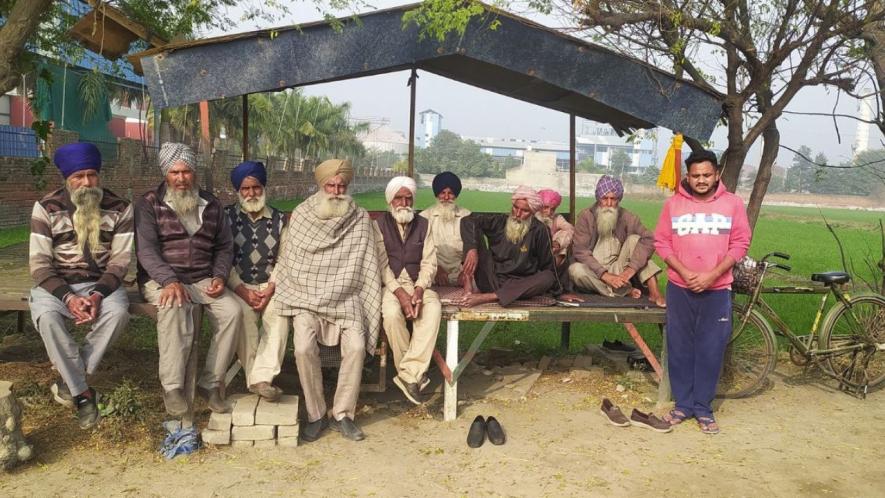
Farmers opposed a proposed ethanol factory in the Tibbi area (Photo - Amarpal Singh Verma, 101Reporers)
Zira, Punjab: In Rajasthan’s Hanumangarh district, farmers opposing a proposed ethanol factory in the Tibbi area often point to one place as a warning: Zira town, in Punjab’s Ferozepur district.
The fears being voiced in Tibbi include air pollution, groundwater contamination, damage to agriculture, and a public health crisis following the installation of the factory. The urgency of these concerns was evident even on January 7, when farmers in Hanumangarh, under the banner of the Ethanol Factory Hatao-Kshetra Bachao Sangharsh Samiti, held a mahapanchayat in Sangaria to protest the proposed ethanol factory.
Those protesting the plant told 101Reporters that the concerns being raised in Rajasthan have already played out in Zira.
The ethanol factory at the centre of Zira’s experience has been shut for more than three and a half years, but its effects continue to shape everyday life in dozens of villages that fall within and around Zira town.
Skin diseases that do not heal, a growing number of kidney and cancer patients, women unable to conceive or suffering repeated miscarriages, livestock deaths, and groundwater so polluted that even drinking water carries the fear of illness all of this remains the reality in Zira.
The factory, Malbros International Private Limited, locally known as the Malbros distillery, was set up in 2006. It produced alcohol and ethanol.
The plant operated for nearly 18 years before it was shut down following months of sustained protest by local residents. Farmers began their agitation on July 24, 2022, which continued uninterrupted for 177 days. In January 2023, citing mounting public pressure and environmental concerns, the Punjab government ordered the closure of the ethanol factory.
Roman Barar (33), an activist of the Sanjha Zira Morcha, the organisation that led the movement to get the factory shut, said that the factory polluted water, land, and air on such a scale that not just one or two, but a total of 44 villages of the town were severely affected.
What matters now, Barar added, is not when the factory shut, but what it left behind. “Three and a half years later, the problems have not ended,” he said. “That tells you the extent of what was done.”
What stayed behind
According to Barar, villagers had complained for years while the factory was operational, but their concerns were dismissed. “People were told this was exaggeration, that there was no proof,” he told 101Reporters. “When investigations finally began, the picture became clear.”
That picture was laid out in a 2023 report by the Central Pollution Control Board (CPCB), which stated that the ethanol plant in Zira had allegedly used reverse boring technology to dispose of hazardous industrial waste. Toxic effluents were injected deep underground, contaminating aquifers and making groundwater unfit for human consumption.
The investigation found that the plant management had dug around 25 borewells specifically to dispose of toxic waste. This practice, the report said, led to groundwater contamination spreading across an area of nearly 15 kilometres.
Water samples collected from villages such as Mansurwal, Mahianwala Kalan, and Rataul Rohi showed high levels of total dissolved solids (TDS), heavy metals, and other toxic elements. In one borewell in Rataul Rohi village, cyanide was detected at four times the acceptable limit.
Barar now carries a digital TDS meter with him. He uses it not as a scientific demonstration, but as a way of showing what people continue to drink every day.
In Mansurwala village, water from one household recorded a TDS level of 500 mg/L. In another house, it was 1,100 mg/L. In Mahianwali village, the reading again stood at around 500 mg/L.
“Earlier, almost everywhere here the TDS ranged between 2,000 and 2,800,” Barar said. “There has been some reduction. But this water is still not safe.”
The World Health Organization links TDS mainly to taste and palatability. It suggests that drinking water is generally acceptable below about 600 mg/L, with 300-500 mg/L considered optimal. Much of the water consumed in the region still falls outside these limits.
No relief
In October 2023, the National Green Tribunal (NGT), acting on reports from the CPCB and the Central Ground Water Board (CGWB), directed authorities to ensure clean drinking water in affected villages. The reports specifically pointed to groundwater pollution in Mansurwala caused by the ethanol plant and distillery.
Residents say little has changed since.
“RO systems were installed in many villages, but most of them are lying defunct,” Barar said. “People are still drinking the same water.”
And the health impact of living with polluted groundwater is visible across villages, though difficult to conclusively diagnose. Swarnjit Kaur, an ASHA supervisor overseeing 23 villages around the factory, said she sees the same pattern everywhere she works.
“In every village, there are women who have been married for five, six, even ten years, but have not conceived,” she said. “Among those who do get pregnant, miscarriages are common.”
She added that she cannot medically attribute these outcomes to pollution alone. “But before the factory was set up, such problems did not exist,” she said. She also reports rising cases of kidney disease, cancer, and chronic skin conditions.
Notably, Mansurwal Kalan, where the factory was located, has emerged as the centre of illness.
Surjit Kaur, an ASHA worker who has been working in the village since 2009, said health problems began appearing five to six years after production started and worsened steadily.
“Women face difficulty conceiving,” she said. “When they do conceive, miscarriages often happen after three or four months.” She estimated that seven to eight people in the village have already died from cancer and kidney disease.
In neighbouring Lehran Kalan village, ASHA worker Amritpal Kaur said cancer and skin diseases remain widespread, forcing people to seek treatment in private hospitals.
Vichitar Singh (70), from Mansurwal village, said several residents had died due to cancer and kidney disease. A 40-year-old kidney patient, Rajveer, passed away recently. “My son Harpreet, who is 42, has kidney failure,” he said.
Diljit Singh (60) showed scars on his back and legs. “I have been undergoing treatment for four to five years,” he said. “The skin disease has not been cured.”
Harjant Singh (70) said both he and his elder brother suffer from chronic skin problems.
Older residents remember a different time. “Our groundwater was sweet like honey,” said Thakur Singh (82). “The factory people ruined it.” Even now, he said, if water is left standing in a vessel, it turns reddish and appears to be soapy.
His granddaughter, Khushpreet Kaur (19), said her hair has been falling out. “All girls and women here are facing this problem.”
Another villager, Harchand Singh, said the damage was not only medical. “Relatives stopped visiting,” he said. “For some time, even marriages stopped taking place.”
Ground zero
Mahianwali village was where pollution from the factory was first detected.
In 2022, black-coloured water emerged during boring work at a langar hall built on the premises of Baba Dunichand Ji’s samadhi site, after which villagers grew suspicious.
Iqbal Singh (62), Kalwant Singh (65), and Gurcharan Singh (58) pointed to the borewell where the water surfaced. “This is when we suspected the factory,” they said. “Later, the reports proved us right. And we are still suffering the consequences.”
In Mahianwali, many residents still depend on traditional healers. Harbhajan Singh (60), who has been treating villagers for 25 years, said such illnesses were not common before the factory began operations.
“In 2007-08, skin diseases, kidney problems, jaundice, breathing issues, vomiting, and diarrhoea started increasing,” he said. “At first, people thought it was normal.”
Soon, jaundice and itching spread to almost every household. “The itching did not respond to medicine,” he said. “Even if it improved, it returned.”
Medical expenses increased, forcing people to travel to Moga, Zira, and Faridkot for treatment.
Spread of damage
People in Rataul Rohi village report similar suffering.
According to the CPCB’s 2023 report, excessive amounts of heavy metals were found in groundwater samples from Mansurwal, Mahianwala Kalan, and Rataul Rohi. In Rataul Rohi, cyanide was detected at four times the permissible limit.
Buta Singh (53) said that even after the factory shut, drinking water remains unsafe. “People are suffering from cancer, jaundice, lung disease, kidney disease, and skin problems,” he said.
Jaswinder Kaur (40) said people are “going to their deaths.” Her 16-year-old nephew, Jaskaran Singh, died of kidney failure last year. Nisha (20) said poor families cannot afford treatment and demanded a comprehensive public health campaign across the region.
Karamjit Kaur (45) lost her husband Buta Singh two years ago. He worked as a labourer at the factory. “He developed an allergy on his legs and had to quit work,” she said. “A few days later, his kidneys failed. Then he was diagnosed with cancer.”
He did not survive. Her 22-year-old daughter has been suffering from throat problems for months. “I fear it could be cancer,” she said.
ASHA worker Kanwaljit Kaur said ten to twelve people in the village have died of cancer, including close relatives. She also confirmed widespread infertility. “Miscarriages are so many it is difficult to count,” she said. Many women have been married for four to twelve years without children. Some families have adopted.
What remains unanswered
Health workers acknowledge that drug addiction among young men has led to impotence in some cases, but say this does not explain the scale of infertility.
“In my area, more than a hundred women cannot become mothers,” Swarnjit Kaur said. “Not all husbands are addicts.”
There is no local epidemiological study conclusively linking pollution to infertility. However, broader research suggests a connection. A recent Lancet study linked poor air quality in India, Pakistan, and Bangladesh to pregnancy loss, particularly among rural women and older mothers.
The impact of pollution is not limited to humans. Harmandar Singh from Mansurwal said that in February 2022, at the peak of pollution, 85 buffaloes died within two days. “Ash was falling in the fields. We were irrigating with polluted water,” he said.
Since then, miscarriages among animals have become common. Mukhtiar Singh said two cows and one buffalo miscarried on his farm. Artificial insemination is now frequent, weakening animals and increasing costs.
Farmers also say that years of irrigating fields with polluted groundwater and exposure to factory ash have degraded soil quality. In Lehran Rohi village, rice yields have fallen from 80-85 man (one man equals 40 kg) per acre to 65-70 man, while wheat yields have dropped from 55-60 man to 40-45 man. Similar declines are reported in Mahianwala and Mansurwal villages.
Local cost of national push
This situation in Zira unfolds as India celebrates achieving its 20% ethanol blending target in 2025, five years ahead of schedule. Ethanol production rose from 38 crore litres in 2014 to over 661 crore litres by June 2025.
Environmental scientists, however, warn that grain-based ethanol plants are highly polluting and that environmental clearances underestimate emissions.
According to the environmental group Scientists for People, ethanol plants release pollutants such as acetaldehyde, formaldehyde, acrolein, and hexane: chemicals linked to respiratory illness, neurological damage, and cancer.
In November, the Punjab government and the Punjab Pollution Control Board filed an affidavit in the NGT acknowledging that the Mansurwal distillery repeatedly violated environmental rules and caused serious harm to air, water, soil, and public health. The affidavit recommended that the unit not be allowed to restart, invoking the polluter-pays principle.
An official of Malbros International, speaking on condition of anonymity, denied all allegations and said pollution had not been proven even around the factory. He said the company had invested Rs 300 crore in the plant, of which Rs 200 crore were loans, and was incurring heavy losses. The company has petitioned the NGT to restart the factory. A hearing is scheduled for January 6.
Meanwhile, protesters remain camped outside the factory.
“We are not against industry,”Barar said. “We raised our voice because our water, land, and air were destroyed.”
For Zira, the factory may be closed. But what it released underground continues to shape life — and illness — long after its gates were locked.
Amarpal Singh Verma is a freelance journalist and a member of 101Reporters, a pan-India network of grassroots reporters.
Get the latest reports & analysis with people's perspective on Protests, movements & deep analytical videos, discussions of the current affairs in your Telegram app. Subscribe to NewsClick's Telegram channel & get Real-Time updates on stories, as they get published on our website.