





‘Save Bengal Rally’: Voices Rise Against Bipolar Politics; Flag Livelihood Issues
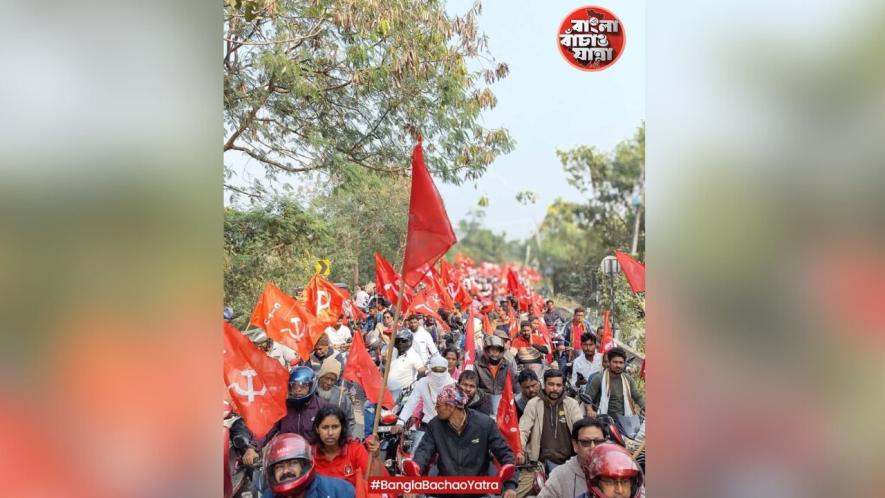
Save Bengal Rally
Kolkata: “Na Ram chahiye, na Rahim chahiye, humko chaihiye roti-rozi ka adhikaar” (We don’t need Ram, nor do we need Rahim, we want livelihood) -- with these words, 60‑year‑old Ahmed Ali Mollah of Amdanga captured the essence of the 1,000-km ‘Save Bengal Rally’ across the state, which began in November end. His voice echoed the frustration of thousands who had gathered to demand what politics has denied them -- the right to work, food, and dignity.
The rally, convened by the Communist Party of India (Marxist) ahead of the 2026 Assembly polls aims at “saving the rights of workers, farmers and the poor.” It is more than a political march, says a CPI(M) leader, adding that it is “a journey across Bengal’s fractured landscape, stitching together stories of dispossession, resilience, and hope.” From the agricultural belts of North Bengal to the industrial ruins of North 24 Parganas, the rally is carrying a singular message: livelihood must return to the centre of public discourse.
Amdanga and Sashan: Democracy Denied
In Amdanga, the panchayat elections were reduced to a farce, say some rally participants, alleging that booths were captured, votes looted, and rampant intimidation.
“For residents, democracy was not merely undermined — it was erased,” says Mollah, who recalled how communist party workers were barred from activity, while the Bharatiya Janata party (BJP) was curiously allowed to campaign.
Criticising the ruling Trinamool Congress (TMC), Mollah said: “The real enemy for TMC is the Left.”
Neighbouring Sashan, too, bore visible scars of “one‑party dominance”. On Tuesday, when the ‘Save Bengal Rally’ passed through the area with defiance, “the red flags fluttered where once silence had reigned”. For many, this was not just a rally but a reclamation of space — a symbolic act of courage in a district where political violence has long suppressed dissent.
The Journey Across Bengal
The rally began in Toofangunj, Cooch Beharin November-end, and is set to conclude at Belghoria in Kolkata’s northern suburbs covering 1000 kilometres of diverse terrains. It went through the agricultural belts of North Bengal, where farmers spoke of declining yields and rising debts.
In fruit‑growing regions, small cultivators lamented the absence of fair markets. In the jute fields of Malda and Murshidabad, workers highlighted mismanagement and lockouts.
On average, the rally took two days to cross each district. But in North 24 Parganas, the industrial heartland, it lingered for three days — a testament to the depth of crisis and the importance of workers’ voices.
Voices From Jute Belt
“Bhukha hai humlog, kam nehi milta idhar” (We are hungry here, as work is a distant dream). Munna Singh, 45, a worker at Titagarh Jute Mill, waited two hours for the rally to arrive. When it did, he spoke with emotion about the collapse of the industrial belt
Over 10,000 units have shut down, leaving thousands jobless, he says, alleging that the promoters, aligned with TMC or BJP, have seized control, often with mafia links.
“Labour quarters are under threat, with land being eyed for real estate projects,” he adds.
Singh’s testimony to NewsClick paints a grim picture of the once bustling jute belt, which has is a zone of dispossession. Workers said they face hostility from both the ruling parties (Centre and state), and said that seeing the “red flags gave a sense of freedom from communal politics.”
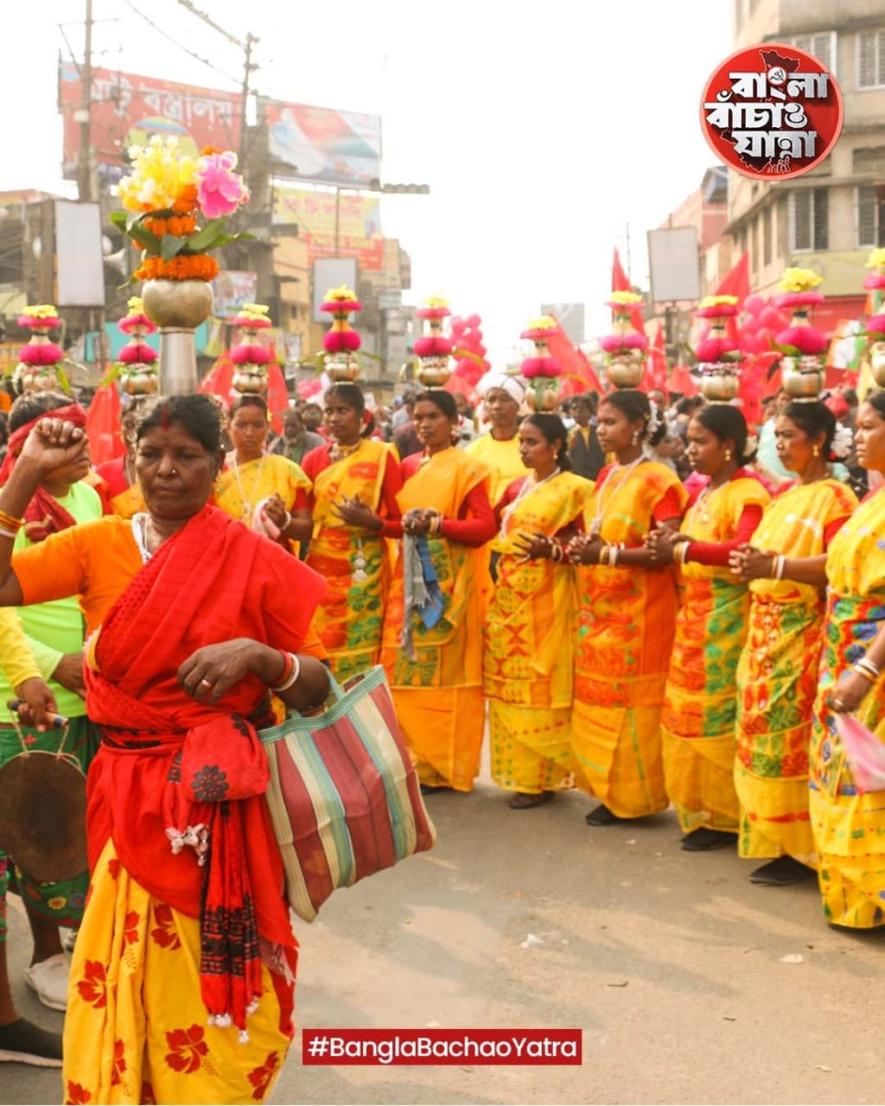
The Politics of Suppression
The rally also exposed the “bipolar game” played by TMC and BJP. Both parties, some workers said, thrived on communal polarisation while ignoring livelihood. In the jute belt, Left activists say that they face harassment, layoffs are rampant, and provident funds are mismanaged. “The entire area is controlled by hooligans,” said Singh, adding “whether from TMC or BJP.”
The ’Save Bengal Rally’ seems to have disrupted this narrative. By foregrounding issues of work and survival, it challenged the dominance of communal politics. For many, it was a reminder that politics can be about bread and dignity, not religion and division.
Leadership and Public Response
The rally, led by CPI(M) central Committee member Minakshi Mukherjee, Palash Das, and Centre of Indian Trade Unions (CITU) leader Gargi Chatterjee, held meetings in Halisahar, Naihati, Ichapur, Noapara, Barasat, and Madhyamgram.
“The rally has reignited discussions in tea stalls about livelihood,” said Chatterjee, adding “It has sidelined the communal narratives that TMC and BJP use for tactical politics.”
Shrinking Work Avenues
At Ichapur, Mukherjee pointed at the shrinking gun factory as a symbol of Bengal’s economic decline. “From tea gardens to jute mills to Central government units, work avenues are being curtailed. This is transforming workers into migrants, and Bengal now leads the country in this tragic trend,” she said.
Her warning resonated with workers who have seen industries collapse and opportunities vanish. Migration has become a survival strategy, with Bengal exporting labour while importing despair. For many, the rally was a chance to voice this crisis — to demand that livelihood should return to the centre of governance.
Communal Distractions
Mukherjee accused both TMC and BJP of distracting people from livelihood issues by stoking communal divisions. Projects like Babri Masjid “recreation” and Jagannath Dham funded by government money, she argued, were designed to polarise communities. “Hatred signals are being sent to Hindus and Muslims alike, damaging Bengal’s tradition of unity,” she said.
The Workers’ Belt: A Symbolic Battleground
North 24 Parganas, once Bengal’s industrial pride, has become a battleground of dispossession. Jute mills, gun factories, and small units have collapsed, leaving workers vulnerable. Promoters, aligned with ruling parties, have seized land and housing. For many, survival now means migration or informal labour.
The ‘Save Bengal Rally’ entered this belt with defiance, painting towns red and reviving memories of solidarity. For workers, it was a symbolic reclamation — a reminder that politics can still speak of their realities.
Livelihood as Resistance
The Save Bengal Rally is a movement to reclaim livelihood from the margins of politics, said a CPI(M) leader. By traversing agricultural fields, industrial ruins, and urban suburbs, it has stitched together a narrative of dispossession and resistance.
In a state where communal polarisation dominates, the rally offered an “alternative vision — one rooted in solidarity, livelihood, and unity.” For Bengal’s workers, it is not just a rally, but a reminder that resistance is possible, and that the fight for “roti and rozi” remains the most urgent struggle in these times.
Get the latest reports & analysis with people's perspective on Protests, movements & deep analytical videos, discussions of the current affairs in your Telegram app. Subscribe to NewsClick's Telegram channel & get Real-Time updates on stories, as they get published on our website.