





Social Work, Conversions and NGOs
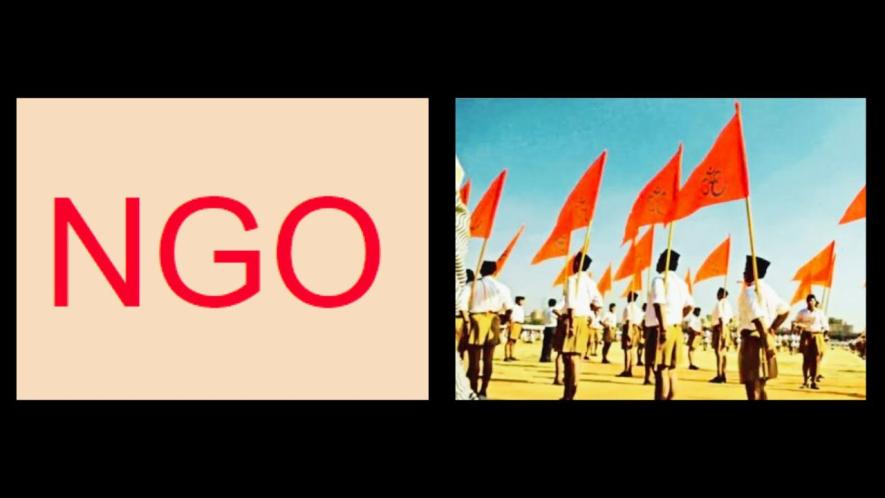
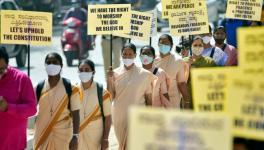
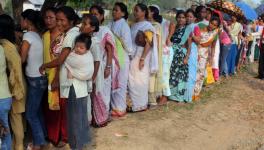
Representational image. Image Courtesy: Wikimedia Commons
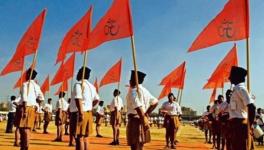
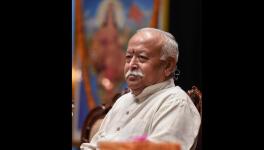
NGOs are much in the news these days for various reasons. From the ramparts of Red Fort, RSS Pracharak Prime Minister Narendra Modi declared that RSS is the biggest NGO of the world. Incidentally, there is a noteworthy aspect of this NGO – it is a non-registered organization, supposed to be doing cultural work. On this count, Priyank Kharge, home minister of Karnataka, called for registration of RSS. The RSS denied that and said that it is just a group of individuals. Fair enough, but what about the massive funds it is receiving?
At another level, recently in the parliament, the Home Ministry moved and got passed an amendment to the Foreign Contributions Regulation Act (FCRA), and Rules thereunder, which seek to restrict the activities of NGO’s receiving foreign funds. The ruling party’s basic intention and propaganda is that forcible conversions are being done particularly by Christian NGOs. In their understanding, the conversion to Christianity is forcible, their running of education and health facilities is an allurement to convert the people to Christianity. How much of this is true?
While we have article 25 in our Constitution which guarantees the citizens the fundamental right to freely practice, profess, and propagate their religion, those in power assert that this article gives us the right to practice, preach and propagate our religion but it does not give the right to convert another person. The understanding of Hindu nationalists is that the efforts of missionaries are due to allurement or force, they deny the agency of those who want to convert themselves. It seems there are no ground level studies to tell us how many of those studying in Christian mission schools convert to that religion. There is also no data how many of Dalits/Adivasis convert to Christianity because of allurement or force.
Population Numbers Give Different Picture
Christianity in India is a very old religion. It came here with the arrival of St. Thomas, according to one version, in 52 CE. He started building of churches and many of the locals took to it. A look at the statistics will tell us that the trajectory of growth of this religion in India has been slow one. As per the last census data (2011), Christians made up 2.30% of the total population. As per previous Censuses, their share in population was: 1971-2.60%, 1981-2.44%, 1991-2.34% and 2001-2.30%. Thus, during a period when lots of noise is being made about forcible conversion, the population census data tells a different story.
Despite this data, the propaganda about forcible conversion and also conversion through allurement has been intense leading to horrific violence. The most ghastly of this violence took place in Keonjhar, Orissa in 1999 when Pastor Graham Steward Staines was burnt alive. The main instigator of this violence was Dara Singh aka Rajendra Singh Pal of Bajrang Dal, who is undergoing life imprisonment. This horrific murder was called by the then President of India K. R. Narayanan as a barbaric act that belonged "...to the world's inventory of black deeds." Wadhva Commission was appointed in the wake of this tragedy. The commission stated that “that the Pastor had not been doing the work of conversion; he was involved in serving the leprosy patients”.
What is remarkable is that as per the report, there was no substantial increase in the percentage of Christian population in the area. The report states, “Keonjhar district had a total population of 15.30 lakh. Out of them, 14.93 lakh were Hindus. Christians, mostly tribals, were 4,707. According to the 1991 census, there were already 4,112 Christians in the district. Thus, there was an increase of only 595 in the Christian population”. This increase is not statistically significant.
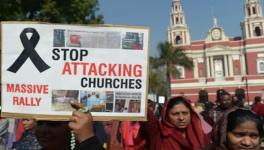
Then we witnessed intense activities in Dangs (Gujarat) and Kandhamal (Orissa). Many from VHP, Swami Aseemanand, Swami Laxmananand had set up their Ashrams in these areas. These areas also witnessed intense violence, culminating in the tragic Kandhamal Violence of 2008. Now, as an offshoot of this propaganda Christian pastors working in remote areas are facing scattered sub-radar violence. Their prayer meetings are labelled as meant for doing conversion work and attacked.
Niyogi Committee Report (1956)
One of the major ideologues of BJP/RSS, Ram Madhav in his article (Indian Express June 27, 2026) supporting the new FCRA modifications reminds that Niyogi Committee had already opined restrictions on Missionaries. Nehru Government decided not to implement its recommendations. Further, Madhav says that now it is Modi who is implementing those recommendations. What were Niyogi committee’s recommendations?
The Niyogi Committee Report on Christian Missionary Activities (1956) investigated controversial religious proselytization in India. It concluded that conversions were largely driven by inducements like education and medical care, warning that foreign missionary networks sought to create a separate Christian state within India.
Prime Minister Jawaharlal Nehru's government effectively rejected the Niyogi Committee Report (1956) because its proposed restrictions which conflicted with the newly formed Constitution, particularly the fundamental right to propagate religion. Nehru viewed the report's recommendations as a threat to religious freedom.
Mahatma Gandhi on Conversion
Madhav points out that Gandhi was against proselytization. It is true; but he was not against freedom of religion. Now freedom of religion is primarily presented and propagated as proselytization. What Gandhi said was not against the practice of religion in any way. In an interview (The Hindu, 22 March 1931), Gandhi apparently stated that if in a self-governing India, missionaries kept 'proselytizing by means of medical aid, education etc., I would certainly ask them to withdraw. Every nation's religion is as good as any other. Certainly, India's religions are adequate for her people. We need no converting spirituality.' This is the first part of the quote and the lines that follow give the totally opposite idea — the ideas which Gandhi held. Gandhi goes on to write: 'This is what the reporter has put in my mouth... All that I can say is that it is a travesty of what I have always said and held.”
He goes on to explain: “I am, then, not against conversion… Every nation considers its own faith to be as good as that of any other. Certainly, the great faiths held by the people of India are adequate for her people…” And then he goes on to list the faiths of India: “Apart from Christianity and Judaism, Hinduism and its offshoots, Islam and Zoroastrianism are living faiths.” (Gandhi's Collected Works, Volume XLVI p. 27-28)
For the ilk of Madhav, Christianity is a foreign religion spread by force and allurement. This basic understanding of theirs’ is a seriously flawed one.
The writer is a human rights activist, who taught at IIT Bombay. The views are personal.
Get the latest reports & analysis with people's perspective on Protests, movements & deep analytical videos, discussions of the current affairs in your Telegram app. Subscribe to NewsClick's Telegram channel & get Real-Time updates on stories, as they get published on our website.