





Urban Area Sabha Meetings Delayed in Tamil Nadu
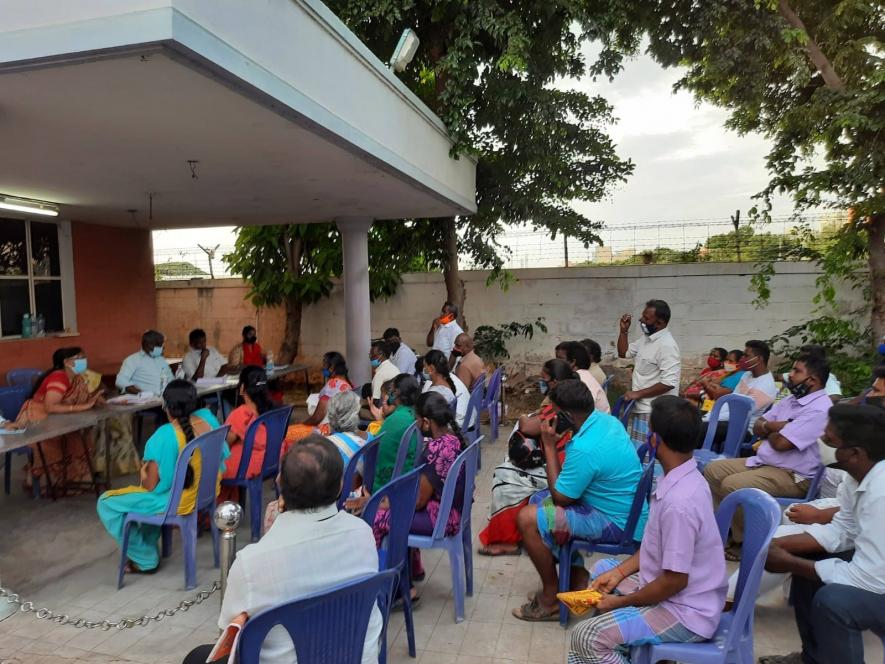
Representational Image. Image Courtesy: Tamil Nadu Urban Habitat Development Board
The urban area sabhas in Tamil Nadu have not met after the first set of meetings held on November 1, 2022. They are designed to meet every three months.
“The state was planning to hold the sabhas in mid-February, but it is not happening. The notification has not yet been released. It should be released at least seven working days before the day of sabha and it must be held on a holiday,” said Charu Govindan, founder-member of the NGO ‘Voice of People’.
“The concept of ward committees is new to Tamil Nadu. They were formed last yeast after the present DMK government published the rules for urban local bodies, ward committees and area sabhas in June 2022,” said Nandakumar Siva, general secretary of Thannatchi, an NGO working towards strengthening local bodies.
The ward committees were formed 12 years after the Karunandhi-led Dravida Munnetra Kazhagam government introduced the Tamil Nadu Municipalities (Amendment) Act, 2010 to establish ward committees and area sabhas in urban local bodies.
Tamil Nadu has a total of 12,838 ward committees in the 21 municipal corporations, 138 municipalities and 490 town panchayats.

Each ward is divided into a number of areas, and based on the population density, they are designated minimum of 4 to maximum ten ward committee members.

GENDER DISPARITY IN GCC WARDS
A recent report showed that Greater Chennai Corporation’s (GCC) ward committees are overwhelmingly dominated by males, with just 170 women out of the 2,000 resident nominees. Also, 85 out of the 200 wards in the city do not have a woman in the ward committees
“Not only gender representation, but there is also a lack of citizens’ representation in these committees,” said Charu Govindan of Voice of People, speaking to NewsClick.
“The nominations must be from the grassroots, through a transparent and accountable model. But it is happening through party posts” said Govindan.
“The area secretaries of political parties are appointing members of the resident nominees” she added.
The GCC council has more than 50% women members, including Chennai mayor R Priya. The councillors make nominations to the ward committees, ten nominations from each area in Chennai.
‘MODIFY RULES’
When the rules for implementing ward committees and area sabhas were published last year, civil society organisations such as Arappor Iyakkam, Thannatchi, Voice of People and others made recommendations for more inclusivity in the area sabha.
They demanded increased reservations for people from the Scheduled Caste/Scheduled Tribe, women and other marginalised groups in the committees.
“The primary problem with respect to poor representation is the rules. There should be reservations, one-third for women and one-third for SC/STs. Kerala and Karnataka have reservations,” said Govindan.

The organisations mentioned above said the number of ward committee members cannot be restricted based on the number of areas in the ward. Instead, the number of members to be nominated from each area should be based on the population of that area – in the ratio of 1 member per every 1000 electors.
The Model Nagara Raj Bill of 2006, which introduced the concept of area sabha, recommends reservation. The Tamil Nadu government did not incorporate them.
“The needs of fisherfolk, vendors, marginal communities and so on would be very specific. More representation is possible if the committee is bigger,” said Govindan.
In Kerala, the ward committee members typically range from 60 to 80.
They also demanded public consultation on the draft rules before notifying them.
The Information and Resource Centre for the Deprived Urban Communities (IRCDUC) urged the state government to include bala sabhas or 'riruvar nagara mandrams' for children in the urban local bodies rules, 2022.
‘POOR AWARENESS’
Civil society activists raise the issue of a lack of awareness among ward committee members as a reason for the poor functioning of the area sabhas.
“We only have had the gram sabha all these years, we didn’t have these urban platforms. Kerala had them 30 years ago,” said Govindan.
“So, 99% of our councillors do not know what the area sabha is about. Workshops should be held to educate them,” he added.
The urban ward sabhas are on the lines of gram sabhas in rural areas, to ensure people’s participation in civic governance.
The ward councillor is the chairman of the area sabha, and the aim of the meetings is to discuss development projects and other civic issues in the area.
Get the latest reports & analysis with people's perspective on Protests, movements & deep analytical videos, discussions of the current affairs in your Telegram app. Subscribe to NewsClick's Telegram channel & get Real-Time updates on stories, as they get published on our website.