





Are Central Universities Modern-Day Agraharams?
Will we ever know the category-wise distribution of vice chancellors of the forty central universities located across the country? Thanks to the rules governing these universities, and those of the University Grants Commission, there is no such record.
This form of “castelessness” at the top is coupled with marginal representation of teachers from socially and physically marginalised sections. Be it the Scheduled Castes, Scheduled Tribes the Other Backward Classes or persons with disabilities, they are hardly ever appointed to teaching posts in central universities. A marker of the invisibilisation of these social groups is the fact that up to 96.65% of the posts of professor meant for candidates from these categories were unfilled on 1 January 2020.
This was discovered by a Delhi University teacher, who sought the information from the UGC under the Right to Information Act. More than 82% posts of professors meant for Scheduled Caste candidates, 93.98% posts meant for Scheduled Tribes and 96.65% posts meant for OBCs still remain vacant. The situation for associate professors is equally dismal, though there are fewer vacant posts of assistant professors for OBCs.
Any news can go viral these days but this explosive disclosure, which raises questions about recruitment procedures and their inherent biases was barely noticed. An explanation is that such news has lost its novelty. Perhaps everybody is aware of the metamorphosis of central universities into a new kind of Agraharam or abode of elite castes. Not long ago there was another set of disclosures under the Right to Information Act. The Department of Personnel and Training (DoPT), the UGC and the Human Resource Development Ministry, had stated that of 1,125 professors only 3.47% were from a Scheduled Caste and among associate professors, only 4.96%. Even the positions meant for tribal and backward candidates were mostly unfilled. The Indian Express had published these findings last year.
This tendency to not fill up important or prestigious positions meant for deprived and backward sections has a long history and deep roots. The annual report of the National Commission on Scheduled Castes and Scheduled Tribes found the situation was bad even a decade ago, in 1999-2000:
-
Professor: BHU 1/360, Aligarh 0/233, JNU, 2/183, Delhi University 3/332, Jamia 0/80, Visva Bharati 1/148, Hyderabad Central University 1/72
-
Reader: BHU 1/396, Aligarh 0/385, JNU 3/100, Delhi University 2/197, Jamia 1/128, Visva Bharati 1/70, Hyderabad Central University 2/87
-
Lecturer: BHU 1/329, Aligarh 0/521, JNU, 11/70, Delhi University 9/140, Jamia 1/216, Visva Bharati 16/188, Hyderabad Central University 13/44
How does this complete rejection of the legitimate rights of the SCs, STs and OBCs take place despite constitutional mandates to ensure them?
The marginalisation and invisibilisation of these communities can be seen a part of what sociologist Ramesh Kamble calls “institutional practice and structural design”. He has said that it a “mechanism of the existing power to deny entitlement. Denial, which is part of the experience of being Dalit, is reiterated through institutional practices and reinforced in structures,” he explains.
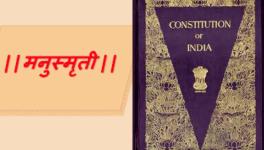
It is also a way to curb the assertion of the marginalised and oppressed sections. Beyond a small section, there is a general disapproval in Varna society of reservation to the historically oppressed or marginalised. On some occasions, their disdain for these sections becomes public, even if in formal settings they may preach tolerance as a civilisational virtue. In practice, many ruthlessly support the graded hierarchy supported by the legend of Manu the law-giver.
The instance of IIT Madras provides insight into the denial of entitlement becoming entrenched as an institutional practice. For around 15 years, this premier institute has repeatedly come under the scanner because of caste asymmetries. Just last year it declared separate entrances for vegetarian and non-vegetarians to the common dining mess, which it withdrew under public pressure. Reports of the institute’s handful of Dalit students and faculty facing discrimination and harassment have also been published from time to time.
When in the early 1970s, reservation for SC and ST candidates was extended to the IITs, PV Indiresan, who was its director from 1979 to 1984, became one of its most vocal opponents. In his 1983 director’s report, he opposed reservation in a very ingenious way. He drew a distinction between the “socially-deprived” who demanded “special privileges” and the “talented” upper castes who deserved “rights of their own”. For him, and many who share such views, upper castes are simply the “talented” who inhabit a casteless, democratic, and meritorious norm threatened by the entry of non-elite castes. In 2011, Indiresan took the Indian government to court challenging the constitutional validity of the OBC reservations in central educational institutions.
And yet IIT Madras should not be viewed as an exception. The lack of diversity in the faculties at the IITs and IIMs is widely known. According to the Human Resource Development Ministry’s figures, SCs, STs and OBCs make up only 9% of the faculty in the IITs and 6% in the IIMs.
Central Universities, IITs, IIMs, regional universities, the list which demonstrates a continuous denial of entitlement can go on across disciplines and institutions.
How does one resist this ongoing denial when society as a whole is engaged in doing the exact opposite? Perhaps Dr Bhimrao Ambedkar had a better comprehension of the challenges involved. He exposed how the community itself puts obstacles in the way of individual freedom and choice. “If the fundamental rights are opposed by the community, no Law, no Parliament, no Judiciary can guarantee them in the real sense of the word,” he said. “What is the use of fundamental rights to the Negro in America, to the Jews in Germany and to the untouchables in India. As Burke said, there is no method found for punishing the multitude,” he said.
The report on prevention of atrocities against SCs prepared by the National Human Rights Commission in 2004 details how civil society corroborates Ambedkar’s views. The report says:
-
Civil society is a distinct beneficiary of the caste-based order and perpetuates unequal social reactions because the customary arrangement assures the dominant classes of social control.
-
It represents the deep divide in social values, where people wish to enjoy all the rights and privileges of a democratic liberal society but vehemently oppose their being granted to SCs.
-
Civil society undermines the state by obstructing the rights and entitlements to all citizens and attempting to perpetuate caste-based inequalities, indignities and violence against SCs.
-
It reflects a deep-seated ambivalence between obscurantism and modernity.
For people concerned over this denial, the first step then becomes to look at the partisan role played by people themselves. This is a unique challenge, for it requires that the failure of the largest democracy to go beyond form and discourse on equality be addressed by people. It requires that we accept that there is a hiatus between constitutional principles and practice and the diametrically opposing ideal that dictates what is ethical.
In other words, the “purity” versus “pollution” paradigm, which is the cornerstone of the caste system, legitimises and sanctifies inequality. As long as inequality is accepted in a caste-based society, in theory and in practice, a legal principle enjoining equality, as in the Constitution, will have no bearing on society’s ethical foundations.
The author is an independent journalist. The views are personal.
Get the latest reports & analysis with people's perspective on Protests, movements & deep analytical videos, discussions of the current affairs in your Telegram app. Subscribe to NewsClick's Telegram channel & get Real-Time updates on stories, as they get published on our website.