





‘All Youth Are Equal?’: Animal Farm, CJP and New Nationalism
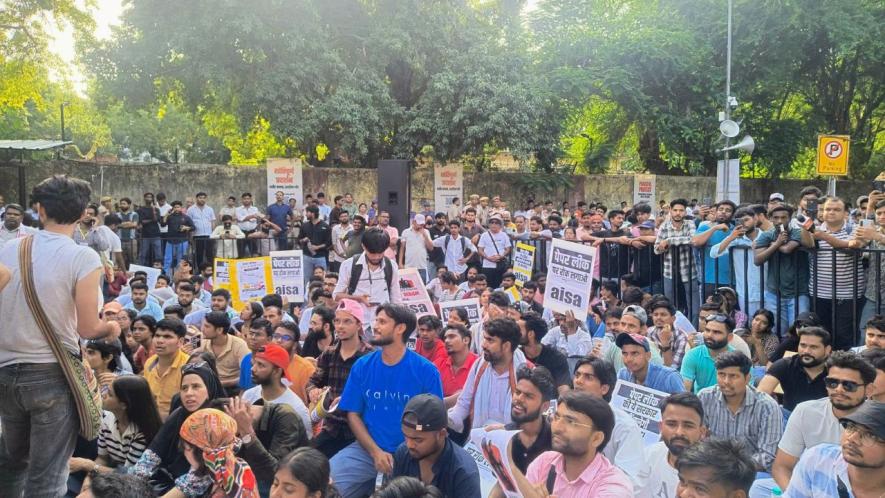
Image Courtesy: AISA Facebook
Young Indians calling themselves ‘cockroaches’ are asking an unfashionable question in today’s India: in a democracy, does the government owe its youth answers, or only slogans?
The Cockroach Janta Party (CJP) started with a courtroom remark and an Instagram post, but it quickly became a symbol of wider frustration among young people in India. The term ‘cockroaches,’ first used as an insult for unemployed youth, was taken up as a shared identity. The question, “What if all cockroaches came together?” turned into a movement with millions of followers, organised protests, and a unique way of expressing dissent that mixes humour with sharp political criticism.
What began as an internet meme now serves as a pointed response to a government that wants to appear strong but often seems defensive when questioned by those it has not managed to employ, protect, or treat fairly.
In George Orwell’s Animal Farm, the animals on Manor Farm start by demanding something basic: respect for their labour and a say in how their world is run. Over time, their revolution is hollowed out by a small group of pigs who master language, spin, and selective memory. The story is not simply about dictatorship. It is about how power justifies itself while quietly rewriting the rules.
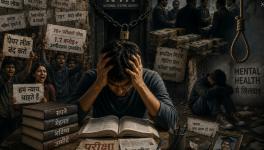
The CJP moment invites us to read India’s youth politics through this lens. If the older language of protest was ideological, Left versus Right, secular versus communal, the new language is practical: paper leaks, re-exams, coaching debt, and the mental health toll of repeated failure in systems young people did not design but must survive.
This change has sparked a strong, defensive response from groups who see themselves as protectors of the ‘national interest.’ So-called nationalist commentators and social media influencers have quickly called CJP anti-national, foreign-funded, or accused them of being part of a Deep State plot against the government. We have seen this before.
In Orwell’s Animal Farm, any animal that questions the pigs is called a traitor or a fool. Today, whenever a group of angry young people steps outside the limits of respectful patriotism, they are shown as leading a hostile narrative war. The message to the public is clear: ignore what these groups say and focus instead on who might be influencing them.
The concerns raised by CJP supporters are not unusual. They want to know why high-stakes entrance exams still leak, why students are blamed for failures rather than institutions, and why a government that talks about ‘Amrit Kaal’ cannot ensure a fair and transparent selection process. Their demands are not radical; they want things to work properly. The movement’s satire is more about highlighting problems than causing trouble. It shows that the agreement between India’s youth and the State is breaking down, not because of big ideas, but because everyday governance is falling short.
Animal Farm’s warning remains highly relevant. Orwell critiques not only authoritarianism but also the manipulation of language that enables injustice to be justified as a necessity and to be reframed as a privilege, even as a sacrifice. The statement, “All animals are equal, but some animals are more equal than others,” highlights how language can prompt citizens to question their own sense of fairness.
When unemployed graduates are advised to be patient and patriotic by individuals whose own children are exempt from poorly administered examinations, they encounter a subtler manifestation of this logic. In such contexts, inequality is reframed as virtue, and those who highlight disparities are accused of undermining national unity.
Critics often attack such movements for inconsistency, dismiss them as ‘internet drama,’ or attempt to co-opt or discredit them by evaluating them solely in terms of conventional political parties. However, this perspective overlooks a crucial issue. A bigger question is why so many young Indians find more genuine emotion in a cockroach meme than in the official stories of empowerment that surround them.
In a democracy that emphasises its electoral magnitude and stability, the true measure of its strength lies not solely in the conduct of elections but in its response to the challenging questions posed by the most marginalised. When dissent is consistently policed, and every protest is characterised as a law-and-order issue or attributed to external conspiracies, the State may achieve temporary control but will raise lasting cynicism. This approach implies that young people are valued more as voters than as active citizens between elections.
Drawing on the allegory in Animal Farm, where the distinction between oppressor and oppressed becomes blurred, and language fails to capture injustice, there is a risk of creating a political environment in which injustice cannot be discussed openly.
However, the CJP moment indicates that Indian youth have not reached this point; through humour, memes, and symbolic expression, they continue to highlight the disparity between political promises and lived realities. A confident democracy would answer that issue not by crushing the ‘cockroaches’ but by repairing the cracks that drove them into the open.
The writer is Assistant Professor of Economics, St. Xavier’s College (Autonomous), Ahmedabad. The views are personal. Email: [email protected]
Get the latest reports & analysis with people's perspective on Protests, movements & deep analytical videos, discussions of the current affairs in your Telegram app. Subscribe to NewsClick's Telegram channel & get Real-Time updates on stories, as they get published on our website.