




The Chimera of “More Reforms”
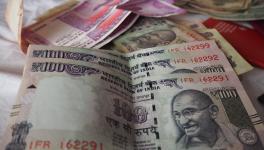
Representational image. Image Courtesy: Needpix.com
Neo-liberal spokespersons have the remarkable quality that whenever an economy gets into a crisis through the pursuit of neo-liberalism, their standard panacea for it is to demand even more neo-liberal “reforms”. This was most evident in Russia after the collapse of the Soviet Union. As neo-liberal “reforms” pushed the Russian economy deeper into crisis, the remedy suggested by the “reformers” at every stage was the institution of even more “reforms”. This went on until the economy had come into the stranglehold of a bunch of oligarchs and the working people had suffered a disastrous absolute decline in their living standards. Vladimir Putin, whatever one may think of him, finally got the economy out of the oligarchs’ grip.
A similar scenario is unfolding in India. The Indian economy at present is in the grip of a serious crisis, manifested, above all, in a sharp fall of the rupee and an acceleration of inflation. This fall of the rupee, though it has quickened of late, has been a long-standing phenomenon, in fact, ever since the rupee was floated in accordance with neo-liberal demands. In 1992-93, immediately after it was floated, the rupee exchanged at 22.74 to a dollar; at the end of 2024 it stood at 85.47, and today it is well in excess of Rs 95 to a dollar.
Floating the currency of an economy that has a more or less perennial current account deficit on the balance of payments is simply to ensure that it keeps drifting downward, as has actually happened. For long stretches of time prior to the float, the exchange rate of the rupee had been pegged and the foreign exchange market had been characterised by rationing.
Neo-liberal “reforms” that enjoin a floating of the currency are clearly what have made possible both its general downward drift and its immediate sharp drop, because of more recent special circumstances, including Donald Trump’s tariffs and the war against Iran. And yet a chorus has started demanding more “reforms” as the solution to the present crisis.
From Prime Minister Narendra Modi, to sundry members of the NITI Aayog, to a phalanx of official and non-official economists, an argument is being advanced that private, especially foreign, capital, should be freed from whatever residual restrictions it still has to face and should be encouraged by all available means to move into India in order to get the country out of the crisis.
Let us examine this argument carefully. As long as the country has a persistence current account deficit, the general expectation about its exchange rate movement must be downward. True, there may be financial flows into the economy that may give rise to an accumulation of foreign exchange reserves, with the central bank wishing to avoid an appreciation of the exchange rate.
But speculators must be particularly blind if they continue to believe that the prevailing exchange rate can be stabilised for ever, even if the economy experiences a persistent current account deficit. That would amount to their believing with confidence that financial inflows would always be, no matter what the circumstances, in excess of what is needed to cover this deficit, which is most unlikely.
Even if for a while the inflow of finance was more than that needed to cover the current account deficit, so that some foreign exchange reserves got built up, any erratic development that causes a drying up of financial inflows to levels below what is needed to cover the deficit, would bring down the exchange rate. The central bank would not be able to prevent it, as it would be chary about running down reserves, for fear of generating expectations that would cause a financial outflow.
Once the exchange rate does depreciate, speculators would nurture expectations of it doing so in the future; and with such expectations, a downward drift in the exchange rate is inevitable in an economy with a persistent current account deficit, if it allows its exchange rate to float.
The proponents of a floating exchange rate regime might argue that the whole point of the float is to eliminate the current deficit, to make sure that the persistent current deficit, which we assumed above, disappears for good. These proponents, in other words, have faith in the existence of an “equilibrium exchange rate” that would eliminate the current account deficit. And if the exchange rate is allowed to float, then, they believe, the actual rate would move towards this equilibrium rate.
Read Also: Neo-Liberal Chickens Are Coming Home to Roost
This argument, however, makes no sense. At any given exchange rate (vis-à-vis the dollar), how successful one country’s goods are compared with another country’s in the world market, depends on a host of factors, ranging from its real wage rate, to the technology it uses, to its international relationships, given the exchange rate (vis-à-vis the dollar) and all these other factors for its competing countries. To expect that a float would make the exchange rate drift toward some equilibrium, presumes that such an equilibrium exists in some meaningful sense.
Suppose, for instance, that given all the other factors, including the exchange rate, relating to the competing countries, eliminating the current account deficit requires an exchange rate depreciation to a level where the real wages get reduced to a quarter of what they currently are. Such a real wage may not only be unacceptable to the workers, but may be so far below subsistence that they cannot survive at that wage. This basically means that no feasible equilibrium exchange rate exists at all; allowing the exchange rate to float downward in such a situation cannot possibly be justified.
In India, despite over three decades of floating, there is no sign of the current account deficit being eliminated; and it is not as if the workers have been demanding and getting so much higher wages that the effects of the secular depreciation of the rupee have been more than negated. Hence, finding a solution to the crisis generated by a floating exchange rate by continuing to let it float but opposing and preventing workers’ resistance to real wage cuts, which is what the panacea of carrying forward neo-liberal “reforms” would suggest, would mean pushing the economy not toward an equilibrium but toward mass starvation of the working class. And even this mass starvation would not be enough, if the competing countries also allow their exchange rates to drift downward as their markets are taken away by our country.
It follows, therefore, that letting the exchange rate float and overcoming the crisis caused by such floating through the imposition of crushing labour laws (which is called labour market “reforms” in neo-liberal parlance) or by enticing financial inflows through tax concessions or higher interest rates offered to global investors (both of which would have a contractionary effect on the economy), does not take the economy to any equilibrium situation, where, other things remaining the same, it would settle down.
Such “reforms” may, of course, halt the rupee’s fall immediately; this is by no means certain, but let us assume it does. But with Trump offering India a choice between accepting extremely high US tariffs or accepting an unequal trade treaty with the US, India would soon post a current account deficit vis-à-vis that country. By implication, its deficit with the world as a whole, is bound to deteriorate, which would make speculators expect a further depreciation of the exchange rate. This means that the downward slide of the rupee which had been temporarily halted by the adoption of such additional “reforms” would resume again, and we would be back to square one.
There is in short no equilibrium exchange rate, no perch for the rupee where it can be stabilised for any length of time; there is only a downward slide in its current and expected rates.
The belief that further liberalisation would correct the situation arising from the already existing liberalisation, is a chimera. In fact, the current situation offers us an opportunity to undo the damage done by the neo-liberal “reforms”. In the case of the exchange rate that we have been talking about, it would mean imposing capital controls, pegging the rate at a certain level and abandoning its float. Once this happens, future financial inflows no doubt would shrink, making it difficult for us to finance our trade and current deficits, which would necessitate trade controls as well.
Instead of introducing “reforms” in the foreign exchange market, we need to introduce controls in this market; and such controls would bring in their train other changes away from neo-liberalism. These would include bilateral trade agreements with countries from which we need to import critical inputs like oil, but without the use of dollars in our transactions.
Indeed, Prime Minister Narendra Modi himself implicitly admits the need for such controls. His call to people to shun foreign trips for preserving foreign exchange, or to work from home for reducing petro-product demand, implicitly admits the need for direct measures. If people do not voluntarily do what he is asking them to do, then the logic of his call would require state action through controls to achieve these ends.
The writer is Professor Emeritus, Centre for Economic Studies and Planning, Jawaharlal Nehru University, New Delhi. The views are personal.
Get the latest reports & analysis with people's perspective on Protests, movements & deep analytical videos, discussions of the current affairs in your Telegram app. Subscribe to NewsClick's Telegram channel & get Real-Time updates on stories, as they get published on our website.