





Do Democracies Really Die? Lessons From a Century of Slow Unravelling
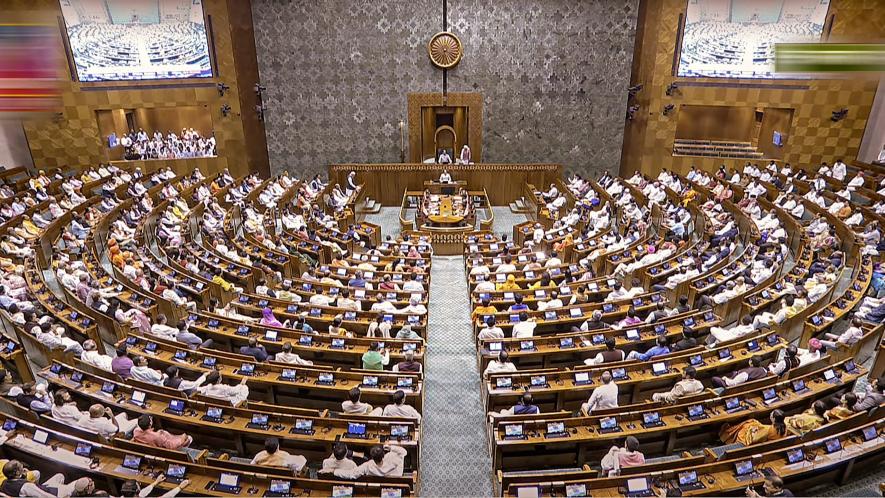
Parliamentarians in the Lok Sabha during a special session of the Parliament, in New Delhi, Tuesday, Sept. 19, 2023. Image Courtesy: PTI (Representational Image)
Public conversation today carries a rising sense of fatalism: democracies seem to be hollowing out, institutions feel weakened, and elected strongmen appear increasingly entrenched. But democracies rarely die in a single moment. Their decay is gradual, legalistic, and often disguised by the familiar rhythms of elections and parliamentary debate. Understanding how democracies erode, and why some democracies survive deep crises is essential for citizens living through moments of democratic anxiety.
The Slow Death of Democratic Systems
When we imagine democratic collapse, we picture tanks in Santiago or stormtroopers in Berlin. These dramatic images suggest that democracy ends with a coup or a violent seizure of power. History, however, shows a more complicated reality. The Weimar Republic did not collapse overnight. Its death was preceded by years of political normalisation of extremist actors and repeated use of emergency powers that bypassed Parliament. By the time Adolf Hitler was appointed Chancellor in 1933, democratic institutions were already deeply corroded.
Chile’s 1973 coup, too, was the culmination of prolonged political polarisation, legislative paralysis, and economic destabilisation. Similarly, Argentina’s recurring breakdowns in the 20th century stemmed from weak civilian control over the military and long-standing legitimacy crises.
In each case, democratic death was not a sudden blow but a long illness. The final collapse was only the last symptom of deeper institutional decay. This historical pattern is echoed today. The 21st century has shown that democracies die even more quietly now. Elections continue, parliaments function, and courts operate yet the substance of democracy erodes underneath.
Hungary is a textbook example: Viktor Orbán has rewritten constitutional rules, reshaped the judiciary, and tightened control over media, all while maintaining the outward rituals of electoral democracy. Turkey under Erdoğan followed a similar trajectory after 2016: emergency decrees became tools to silence dissent, purge institutions, and remake the constitutional order.
India’s democratic concerns also fit within this global shift. The centralisation of power, weakening of autonomous institutions, shrinking civic freedoms, and the use of State agencies against political opponents reflect what scholars describe as “competitive authoritarianism.” Elections remain, but they become increasingly uneven contests.
How Democracies Erode Within
If democracies today die slowly, they do so through three interconnected mechanisms. First, elected governments increasingly rely on legal tools rather than overt force. Constitutional amendments, executive decrees, and regulatory changes are used to reshape the institutional landscape in favour of the ruling party. This “legal pathway to autocracy” is effective precisely because it appears legitimate. Citizens often struggle to discern when democratic rules are being bent beyond recognition.
Second, democracies erode when the informal norms holding them together collapse. Mutual toleration of the idea that opponents are legitimate, and institutional forbearance the restraint in using available powers excessively are essential. When these norms break down, politics becomes a zero-sum battlefield. The opposition is demonised, State institutions are politicised, and public discourse becomes corrosive. Once these norms give way, even strong constitutional systems become vulnerable.
Third, social polarisation and economic anxiety push electorates toward leaders who promise order and stability. When people begin to prioritise identity or security over democratic freedoms, the temptation to centralise power grows. Democracies rarely collapse against the will of the people; they collapse because a portion of the public becomes willing to sacrifice democratic safeguards for short-term reassurance or national pride. These mechanisms interact. Polarisation weakens norms, which makes legal autocratisation easier, which in turn deepens polarisation -- a downward spiral that has repeated across continents.
How Democracies Can Save Themselves
Despite these troubling trends, democracies are not doomed. Comparative research shows that democratic collapse is far from inevitable, countries with resilient institutions, active civil societies, and effective political gatekeeping often weather even severe crises. Strengthening independent institutions is key. Judicial autonomy, free media, and an impartial bureaucracy act as counterweights to executive overreach. Wherever these institutions remain robust, democratic backsliding slows or stalls.
Equally important is political gatekeeping. Political parties play an essential role in protecting democracy when they refuse to ally with or normalise anti-democratic actors. Weimar Germany’s fate was sealed when conservative elites believed they could “control” Hitler. Similar miscalculations have occurred in modern contexts when mainstream leaders empower extremists for short-term gain.
Civil society is another line of defence. Journalists, student movements, unions, and rights organisations often detect democratic erosion earlier than formal institutions. When civic space is vibrant, public awareness remains high; when civic space shrinks, democratic decline accelerates.
Finally, democracies must place strict limits on emergency powers. One of the clearest lessons from history is that temporary crises often become pretexts for permanent expansions of executive authority. Sunset clauses, legislative review, and judicial oversight are crucial to ensure that exceptions do not become the norm.
Vigilance, Not Fatalism
Recognising democratic erosion is not an invitation to despair. Democracies are uniquely capable of self-correction, but only if citizens and institutions mobilise early, before erosion becomes irreversible. The deeper danger today is not authoritarianism itself, but democratic complacency. The belief that “it cannot happen here” has been the final mistake of many societies. Weimar’s elites believed Hitler could be contained. Chilean politicians assumed the military would intervene only temporarily. Hungarian voters did not expect that one leader could reshape their republic so dramatically.
Democracies die not because they are attacked from without, but because those entrusted with their defence choose silence over resistance, and short-term political advantage over constitutional integrity. If there is a lesson to be drawn from a century of democratic breakdowns, it is this: Democracy rarely collapses with a loud crash. It collapses slowly, then suddenly and only if we allow it to.
The writer is Assistant Professor of Political Science at Akal University, Talwandi Sabo, Punjab. The views are personal. He can be reached at [email protected].
Get the latest reports & analysis with people's perspective on Protests, movements & deep analytical videos, discussions of the current affairs in your Telegram app. Subscribe to NewsClick's Telegram channel & get Real-Time updates on stories, as they get published on our website.