





The Hidden Crisis of Child Labour in India
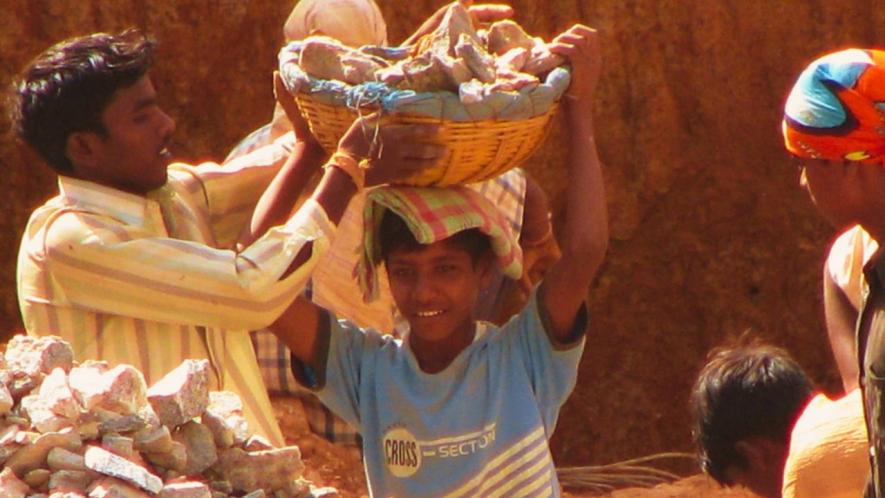
Representational Image. Image Courtesy: Flickr
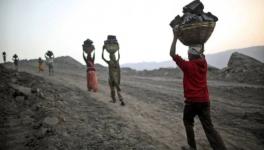
On a busy morning somewhere in India, school bells ring and children hurry toward their classrooms carrying books, uniforms and dreams. At the same moment, millions of others begin a very different day. Some work in the fields under the scorching sun. Others clean dishes in roadside eateries, weave carpets in cramped rooms, carry bricks at construction sites, or repair vehicles in small workshops. Their classrooms have been replaced by workplaces. Their lessons are not mathematics or science, but survival.
On World Child Labour Day on June 12, this silent contrast captures one of India's most persistent and disturbing social realities: child labour.
Despite decades of economic growth, constitutional safeguards, and legal reforms, millions of Indian children continue to spend their childhood in labour rather than learning. Behind the impressive statistics of development lies a painful truth. For far too many children, childhood itself remains a privilege rather than a right.
Child labour is not a new phenomenon in India. References to child employment and apprenticeship can be traced back to ancient texts, including Kautilya's Arthashastra in the third century BCE. During the colonial period, children worked in textile mills, plantations, mines, and handicraft industries across the subcontinent. More than 2,000 years later, the setting has changed, but the injustice remains remarkably similar.
According to Census 2011, India had over 10 million child labourers. Globally, estimates by the International Labour Organisation and UNICEF indicate that nearly 160 million children remain engaged in child labour. While exact figures fluctuate over time, the reality remains undeniable. Millions of children continue to be deprived of education, health, and opportunity.
The largest share of child labour is found in agriculture, where children often assist in farming activities under difficult conditions. Others work in construction, domestic service, manufacturing units, workshops, restaurants, street vending, and informal sectors that remain largely hidden from public scrutiny. Their labour often goes unnoticed because it has become normalised.
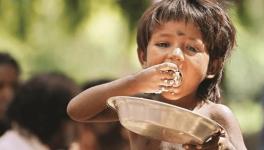
Many people encounter child labour every day without questioning it. The child serving tea at a roadside stall, the young helper in a mechanic's workshop, the boy carrying luggage near a tourist destination, or the girl working as domestic help often fade into the background of daily life. Yet each of these children represents a lost opportunity, an interrupted education, and a future placed at risk.
At its core, child labour is not merely a labour issue. It is a manifestation of poverty. A child rarely chooses work over school. More often, that choice is imposed by circumstance. Empty kitchens, unpaid bills, mounting debts, crop failures, illness, and unemployment force countless families into impossible decisions. For many households living on the margins, a child's earnings can mean the difference between eating and going hungry. Child labour, therefore, reflects not only the exploitation of children, but also the harsh realities of poverty and economic insecurity.
As long as poverty persists, child labour will continue to find new forms, new workplaces, and new victims.
The roots of child labour lie deep within poverty, unemployment, inequality, and social vulnerability. Families struggling to survive frequently depend on every available source of income. When household finances collapse, children are often pushed into work. The decision may appear practical in the short term, but its long-term consequences are devastating.
Every child who leaves school to earn a few hundred rupees today risks remaining trapped in low paid employment tomorrow. Education remains the most effective pathway out of poverty. When a child is denied education, the cycle of deprivation is simply passed from one generation to the next.
India's Constitution clearly recognises this reality. Article 21A guarantees the right to education. Article 24 prohibits the employment of children in hazardous occupations. Articles 39(f) and 45 call upon the State to protect childhood and promote educational opportunities. Laws such as the Child and Adolescent Labour (Prohibition and Regulation) Act and the Right to Education Act, 2009, reinforce these commitments. The country has also launched several initiatives, including the National Child Labour Project, to identify, rehabilitate, and educate vulnerable children.
At the international level, India supports the goals of the International Labour Organisation and the United Nations Sustainable Development Goals, particularly SDG 8.7, which calls for immediate and effective measures to eradicate child labour in all its forms.
Yet laws alone cannot solve the problem.
Governments can frame policies. Courts can issue judgments. Police can conduct rescue operations. But lasting change requires a collective moral commitment.
Parents must recognise education as an investment rather than an expense. Schools must ensure that vulnerable children remain enrolled and supported. Religious institutions must use their influence to promote compassion and social responsibility. Employers must refuse to profit from the labour of children. Society must stop viewing child labour as normal.
Most importantly, citizens must learn to see child labour for what it truly is: not a sign of industriousness, but a sign of failure.
A nation is judged not merely by its economic achievements, technological advancements, or rising global stature. It is judged by how it treats its most vulnerable citizens.
Somewhere in India tonight, a child will fall asleep exhausted after a day of work. Tomorrow, that child will wake before sunrise and repeat the same routine. The tragedy is not only that a childhood has been stolen. The greater tragedy is that such scenes no longer shock us.
India cannot aspire to become a global leader while millions of its children remain trapped in labour. Development cannot be measured only through highways built, industries established, or markets expanded. It must also be measured through childhoods protected, classrooms filled, and dreams preserved.
The children of India do not need sympathy.
They need freedom.
They need education.
They need opportunity.
And history will judge us by whether we had the courage to provide all three.
The writer is a researcher in South Asian history, specialising in socio-political dynamics, minority experiences, and marginalised voices. The views are personal. [email protected]
Get the latest reports & analysis with people's perspective on Protests, movements & deep analytical videos, discussions of the current affairs in your Telegram app. Subscribe to NewsClick's Telegram channel & get Real-Time updates on stories, as they get published on our website.