





India: Smart Cities, Unequal Cities
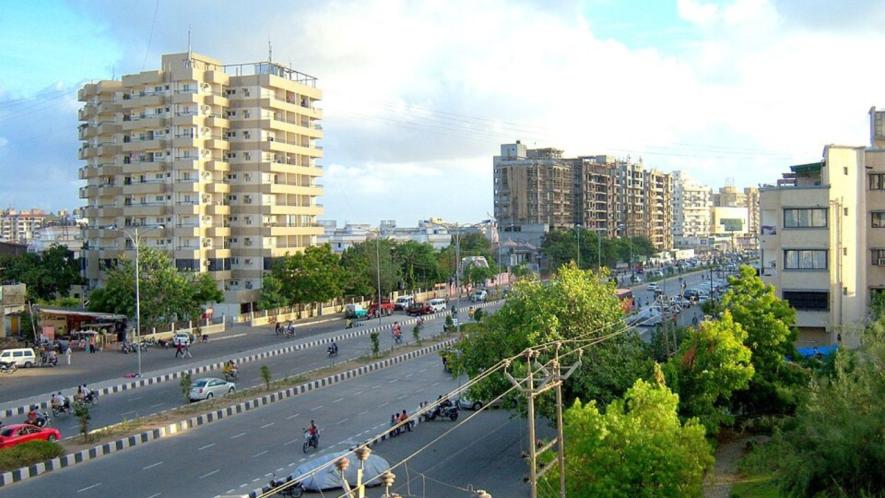
Representational image. Image Courtesy: Wikimedia Commons
When the Smart Cities Mission was announced in 2015, it was pitched as a “bold vision” for India’s urban future. Cities would be more efficient, sustainable and technologically advanced. Digital government, advanced transportation systems, surveillance networks, integrated command centres, and modern infrastructure would benefit millions of urban dwellers.
Ten years on, there is no denying that India’s cities are more digital. But there is still one crucial question unanswered: clever for whom? The benefits of the Smart Cities Mission are often unevenly distributed as technology-driven growth takes root in urban India. While some neighbourhoods develop world-class infrastructure, a large proportion of urban people still experience inadequate housing, poor public services, water shortages and precarious employment. The result is an emerging contradiction at the heart of India’s urban transformation: cities may be getting smarter, but they are not necessarily getting fairer.
The Promise of Smart Urbanism
The Smart Cities Mission was launched in the context of rapid strides of urbanisation in India. By 2030, as many as 600 million Indians are expected to be living in cities. Policymakers said that existing models of urban governance could not deal with the problems of growing populations, increased needs for infrastructure and climate-related issues. The notion of the mission was to harness technology and data effectively. Cities were encouraged to develop integrated command and control centres, install sensors, improve traffic management, digitise public services and upgrade urban infrastructure.
All this looked reasonable on paper. Better monitoring could improve service delivery. Real-time data could assist in traffic management, waste collection and emergency response. Digital platforms might increase transparency and citizen participation. But the way the Mission was carried out, brought up a more serious issue. Smart city development often emphasises technological visibility over underlying disparities.
Missing Voice in Urban Governance
The Smart Cities Mission’s area-based development approach has been a matter of long-standing controversy. Many programmes instead spent money on specific areas rather than improving conditions in whole cities. These designated areas were typically a small component of the metropolitan environment. Public places were beautified, roads were improved, Wi-Fi networks were set up and surveillance systems were increased. Meanwhile, shortages of basic services continued among neighbouring settlements.
This is especially true in areas where informal settlements are located next to newly built smart districts. People who live just a few kilometers apart experience very different forms of urban citizenship.
Smart city projects often led to improved mobility, cleaner public spaces and better digital services for middle class citizens and business districts. The key challenges for informal workers, migratory workers and low-income households were the same: affordable housing, access to water and sanitation, health care and stable employment. Technology can assist urban management, but cannot substitute the need to address structural disparities.
Urban Governance, Missing Voices
The smart city model also introduced new forms of government, and questions of democratic accountability. Many of the projects were carried out through Special Purpose Vehicles (SPVs), corporate-style corporations set up to manage smart city investments and execution. The intent was to make these institutions more efficient, but these often worked outside the normal processes of municipal government. Critics say this approach weakened the power of elected municipal governments. The technocrats, the consultants and the private interests became stronger than the directly accountable public representatives.
This model of governance is symptomatic of a broader trend in urban governance that tends to privilege knowledge and technology over participation. But cities are far more than technological systems. They are political milieus created by conflicting interests, social inequalities and other demands. When communities have less input over planning decisions, urban growth often benefits those with greater economic and political power. The debate isn't whether technology should be employed in cities. Instead, who decides what that technology is used for and who it ultimately serves.
Surveillance Without Inclusion
Perhaps the most visible manifestation of the Smart Cities Mission was the Integrated Command and Control Centre. These facilities gather and process information from CCTV cameras, traffic systems, public utilities and other urban infrastructure. Supporters say such systems improve public safety and emergency response. During the COVID-19 outbreak, many localities set up command centres to monitor and coordinate healthcare services.
But the rapid proliferation of monitoring infrastructure raises questions about privacy, accountability and civil liberties. Many communities have poured resources into surveillance technologies without creating robust oversight or public review systems.
More importantly, surveillance does little to change the social factors that underlie urban vulnerabilities. Even with cameras tracking a neighborhood, they can’t offer cheap homes. Dashboards can help monitor service delivery but not remove economic discrimination. More visibility to administrators doesn't make a city more inclusive.
Climate Resilience and Urban Inequities
As Indian cities battle climate change, the limitations of technology-driven urban growth are becoming ever more apparent. Metropolitan areas are seeing more heatwaves, flooding, water scarcity and air pollution. But these effects are not evenly felt. Low-income neighbourhoods, marginalised communities and often informal settlements are the most vulnerable and least protected.
Many smart city projects have focused on digital infrastructure rather than climate adaptation methods that directly benefit vulnerable populations. Cooling cities, affordable public transport, housing that can withstand flooding and equal access to green space are generally secondary concerns.
This disconnect is important because climate resilience is fundamentally a social justice issue. Yet the communities that suffer the most from environmental problems are often the least able to adapt. A smart city would understand that resilience is not just about technology, but also about inequality.
Reconsidering the Traits of a Smart City
There can be no doubt that India's urban future will need innovation. Digital tools can improve governance, optimise services and strengthen urban planning. The problem is to realise that technical progress is not an aim in itself. India's problems in urban areas are not only technological. They are social, economic and political. Sensors and data platforms alone will not be enough to tackle housing shortages, informal employment, unequal access to services or environmental risks. A more inclusive vision of smart urbanism would place citizens, not technologies, at its centre. There would be investment in universal access to basic services, low-cost housing, climate resilience and participatory governance. Technology would be a means to achieve these goals and not a measure of progress in and of itself.
The success of India’s cities is not measured by the number of cameras installed, dashboards created or command centres set up. Urban residents should be able to access the opportunities and services needed to live a decent life, regardless of income, occupation or neighborhood.
In India, with urbanisation, the challenge is not just building smart cities, but those that are intelligent and just. Without this commitment, the promise of urban modernisation risks becoming just another narrative of progress for some, while leaving others behind.
The writer is a columnist and climate researcher with experience in political research analysis, ESG research and energy policy. The views are personal.
Get the latest reports & analysis with people's perspective on Protests, movements & deep analytical videos, discussions of the current affairs in your Telegram app. Subscribe to NewsClick's Telegram channel & get Real-Time updates on stories, as they get published on our website.