





Ken-Betwa to Uttarakhand: India Must Rethink EIA Before Next Protest Erupts
When communities begin to take ownership of roads, refuse land surveys, or physically block construction equipment, it is easy to dismiss them as isolated anti-development protests. But the continuing resistance to the Ken-Betwa River Linking Project and the current popular mobilisation in Uttarakhand against hydroelectric and infrastructure projects, signify something far more profound. They reveal a structural weakness in India’s environmental governance.
The common denominator is more than relocation or ecological degradation. The perception is growing that decisions affecting people’s land, forests, rivers, and livelihoods are made long before they are consulted.
The Environmental Impact Assessment (EIA), which is supposed to be the country’s primary democratic and scientific protection against such conflicts, increasingly has become a procedural exercise, not a real process of environmental decision-making. As India speeds up infrastructure development through the National Infrastructure Pipeline, PM Gati Shakti, renewable energy corridors, and river-linking projects, revisiting the EIA framework is no longer just an environmental imperative. It is a democratic necessity.
Governance Failure: Development Without Consent
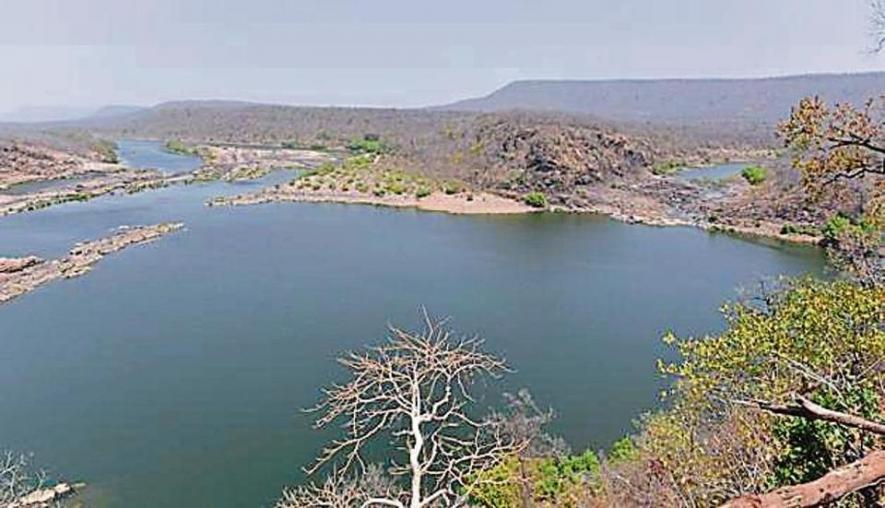
The Ken-Betwa River Linking Project, India’s first river interlink, will transfer surplus water from river Ken to the Betwa basin and irrigate drought-prone districts of Madhya Pradesh and Uttar Pradesh. Government narratives say it is a water security and climate adaptation project of historic significance. But local communities, environmentalists, and conservation experts have continued to oppose the proposal. The villagers have been repeatedly raising concerns over land acquisition, forest diversion, lack of adequate rehabilitation, and ecological implications for the Panna Tiger Reserve. Many affected residents say public consultations were more like procedural formalities than exercises in real democratic governance.
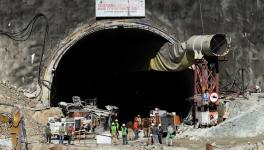
In Uttarakhand, too, there is a similar trend. Repeated disasters, such as the Kedarnath floods of 2013, the Chamoli disaster of 2021, and the increasing occurrence of landslides, have led to the skepticism of the local populations regarding mega infrastructure projects in the Himalayan ecosystem.
Protests against hydroelectric projects, road widening, quarrying, and other construction operations have expressed concerns that the cumulative environmental dangers are being downplayed and local voices are being ignored. While the projects differ in location and intent, the governance gap is strikingly similar: environmental permits are treated as administrative approvals, not informed public choices.
EIA Framework Has Become Clearance-Centric
India came up with EIAs to ensure that development projects undergo scientific evaluation before these are given environmental clearance. An EIA should, as far as possible, identify ecological issues, evaluate social impacts, consider alternatives, and allow for the participation of affected populations in decision-making. The system has evolved over the years, though, favouring project approval over environmental review.
Usually, public hearings are held when the project planning is almost complete, and there is little opportunity for major change. Technical reports often depend on limited baseline data, seasonal surveys, or consultant-generated assessments that do not address long-term ecological trends.
More importantly, EIAs continue to assess projects in isolation, without considering cumulative impacts within an entire landscape or river basin. This project-by-project approach is becoming inadequate in ecologically sensitive zones, such as the Himalayas and forest ecosystems of central India.
Climate Change Invalidates Existing EIAs
The EIA Notification, 2006, evolved at a time when climate change was not a major concern for infrastructure planning. But climate-induced disasters have become a defining feature of India’s development scenario. Extreme rainfall events, glacial lake outburst floods, prolonged droughts, and heatwaves are altering environmental baselines faster than traditional impact assessments can keep up.
However, climate risk assessments are largely missing from the EIA process in India. Environmental data historically used to evaluate projects do not adequately represent future climate scenarios. Hydropower projects are often studied in isolation, although many dams can influence the hydrology of an entire river basin.
Likewise, large-scale water transfer projects rarely consider the impacts that changing rainfall patterns may have on future river flows. An EIA methodology not including climate science risks approving infrastructure on assumptions that may not be valid in decades to come.
Public Participation Reduced to Processes
Public participation is perhaps the most serious flaw in the existing EIA regime in India.
Communities are often asked to participate in public hearings after the project design has been finalised. There information asymmetry, as technical reports are often not available due to language problems, limited distribution, and very specialised presentation. Meaningful consultation is more than fulfilling regulatory obligations. It requires early engagement, open sharing of information about the project, the incorporation of local ecological knowledge, and sensitivity to public concerns.
When consultation is more symbolic than substantive, public trust is eroded. People are going to the courts, to rallies, and civil disobedience because institutional channels don’t seem to work anymore. This absence of procedural legitimacy is clear by the protests in Uttarakhand, in Ken-Betwa and against infrastructure projects.
India Needs Strategic Environmental Assessment
Many countries have moved on from assessing projects in isolation. Strategic Environmental Assessment (SEA) evaluates the combined environmental consequences of policies, regional development plans, and sectoral programmes prior to the granting of consent for individual projects. Repeated suggestions from environmentalists and expert bodies to institutionalise SEA have not yet been taken up in India.
Had the Ken-Betwa region been subjected to a basin-wide strategic assessment, policymakers would have been able to evaluate the cumulative ecological impacts on river systems, wildlife habitats, groundwater, downstream communities, and climate resilience prior to making commitments to specific engineering solutions.
Thus, in Uttarakhand, environmental assessments at the landscape level could consider the cumulative impacts of hydropower, roadways, tunneling, tourism infrastructure, and urbanisation on sensitive Himalayan ecosystems, rather than assessing each project separately.
Strategic assessments can help prevent conflict by allowing governments to identify ecologically friendly zones before project-level spending begins.
Environmental Justice, the Core of Governance
Environmental assessments in India continue to focus on measurable ecological variables and to ignore issues of justice. Who pays the environmental costs? Who gains from the process of development? Whose knowledge is more important in decision-making?
Marginalised communities, such as Adivasis, forest-dependent communities, Dalits, small farmers, and pastoralists suffer from least institutional influence but often bear disproportionate consequences. Environmental governance cannot be reduced to inventories of biodiversity and modeling of pollution. It must also recognise distributive, procedural, and recognition justice as key elements of environmental decision-making. If environmental justice is not put into practice, infrastructure conflicts will continue regardless of how technologically advanced they are.
A Stronger EIA is Not Against Development
One of the myths is that environmental regulation is bad for business. Indeed, bad environmental governance results in many more delays than good assessments. Poorly done EIAs lead to lawsuits, project stoppages, escalating rehabilitation costs, loss of investor confidence, and prolonged social unrest. With robust environmental assessments, governments can spot problems early, improve project design, and gain societal legitimacy, all before construction begins. It doesn't slow development; it makes it more sustainable.
The Price of Ignoring Public Trust
India is at a critical crossroads. The economic path forward over the decades will be determined by massive investments in infrastructure, renewable energy, mining, and industrial corridors. But economic aspiration is no substitute for institutional legitimacy.
The protests in Ken-Betwa and Uttarakhand should not be dismissed as localised disturbances. They contend that the structure of environmental governance in India is attempting to reconcile development with democratic accountability.
Reforming the environmental impact assessment system is not just an environmental reform. It is a chance to rebuild public confidence in state institutions, to embed climate resilience into development planning, and to ensure infrastructure expansion is achieved through participation, not confrontation.
If India continues to see environmental clearances as administrative approvals rather than democratic processes, expect more protests, more litigation, and more uncertain development. The question is not about the need for infrastructure in India. The question is whether India can develop it without citizens feeling left out of decisions impacting the landscapes where they live.
The writer is a columnist and climate researcher with experience in political research analysis, ESG research, and energy policy. The views are personal.
Get the latest reports & analysis with people's perspective on Protests, movements & deep analytical videos, discussions of the current affairs in your Telegram app. Subscribe to NewsClick's Telegram channel & get Real-Time updates on stories, as they get published on our website.