





New Labour Codes: A Blow to Workers’ Rights

File Image
After years of struggle, India has built a framework of labour rights—an important social contract achieved through long struggle. But what happens when one set of laws changes this entire contract?
Around 2019- 2020, during the pandemic and without much parliamentary debate, the government passed four new labour codes. These were presented as “modernisation,” but deeper analysis shows something else: a major shift from worker rights to employer flexibility, from security to precarity. This is not just an update—it is the biggest restructuring of India’s labour market since Independence. And the resistance is intense. Why?
After Independence, leaders like B.R. Ambedkar emphasised that while industrial development was essential, protecting human dignity was even more important. This vision shaped crucial laws, such as the Industrial Disputes Act of 1947, which required government approval for large-scale retrenchment; the Trade Unions Act of 1926, safeguarding the right to form unions; the Factories Act of 1948, ensuring workplace safety; and the Minimum Wages Act of 1948, setting wage standards. Together, these laws established a social compromise: workers received rights, stability, and protection, while industries benefited from a dependable workforce.
However, after economic liberalisation in the 1990s, a new ideology—“Flexible Labour Market”—gained ground, prioritising ease of hiring and firing over job security. Many experts argue that the new labour codes do more than merely update existing laws; these fundamentally dismantle this long-standing social contract.
In November 2025, the Indian government quietly notified four new labour codes – covering wages, industrial relations, social security and occupational safety – replacing 29 existing laws The official line is that this overhaul “modernises” outdated regulations, simplifies compliance and extends social security to more workers.
In reality, trade unions charge, the codes herald a shift from secure jobs to precarious, contract work, tilting power toward employers. Nationwide protests erupted immediately, with unions denouncing the reform as a “deceptive fraud” that “bulldozes” workers’ rights. Even senior Bharatiya Janata Party (BJP) leader Basavaraj Bommai – who chairs the Parliament’s Standing Committee on Labour – has warned that the government’s failure to consult the traditional tripartite Labour Conference “undermines the democratic legitimacy” of these reforms.
The new Industrial Relations Code marks the beginning of an institutionalised recognition of temporary jobs, built on the expansion of fixed-term and hire-and-fire employment practices. Under the new framework, companies can hire workers on 6–11 month fixed-term contracts, with no obligation to provide compensation or renewal once the contract ends—and crucially, there is no requirement that the work itself be temporary.
Even roles that are permanent in nature can now be filled through short-term contracts. Retrenchment rules have also been relaxed: while earlier any establishment with more than 100 workers needed government permission for layoffs, the threshold has now been raised to 300 workers, with the government retaining the power to increase it further.
Under the Code on Occupational Safety, Health and Working Conditions, 2020, the definition of a “factory” has been altered, where earlier a factory was any premises where the manufacturing process is carried out and employs more than 10 workers, if the process is carried out using power, or 20 workers, if it is carried out without using power. This was the same as the Factories Act, 1948, which is being subsumed by the codes.
In 2020, the draft Bill on the labour codes increased this threshold to 20 workers for premises where the manufacturing process is carried out using power, and 40 workers for premises where it is carried out without using power. At the same time, contract labour safeguards were similarly weakened, as contractors would now need a licence only if they employ more than 50 workers, instead of the earlier threshold of 20.
Together, these changes make it far easier for companies to hire and fire at will, often resulting in more dismissals than stable employment. Even the traditional eight-hour workday has been diluted: although the code mentions it, another provision allows the government to extend shifts up to 12 hours, and overtime can run as high as 125 hours per quarter. Additionally, gig workers, platform workers, and those in the unorganised sector still lack universal, enforceable social security rights, depending instead on potential future schemes that may or may not materialise.
The Industrial Relations Code has attracted the strongest opposition because it significantly curtails fundamental labour rights, beginning with a narrower definition of who qualifies as a “worker.” Anyone earning above ₹18,000 or employed in a supervisory role is excluded, meaning key labour protections no longer apply to them.
Forming a union has also become considerably more difficult, as any new union must secure—and continually maintain—at least 20% membership, while the participation of “outsiders” in union leadership has been tightly restricted. Hence, even when unions do form, gaining official recognition will be nearly impossible. Also, a union can bargain on behalf of workers only if it holds 51% membership, and without a secret ballot, management interference has become far easier. The right to strike is similarly constrained. Workers must give 14 days’ notice, cannot strike during conciliation proceedings, and must wait another 60 days afterward, while any deviation risks criminal penalties, including fines and jail time. These restrictions effectively leave the right to strike only on paper.
Taken together, these provisions create an environment where forming unions is extremely difficult, achieving recognition is even harder, and organising any meaningful protest becomes almost impossible.
All India Trade Union Congress or AITUC leader Amarjeet Kaur has warned that the “reforms” risk dragging Indian labour “back to the colonial era where [workers] can’t even raise their voice nor fight to form or legalise a trade union”
A major concern running through the new labour codes is the frequent use of the phrase “as may be prescribed by the government,” which effectively means that the actual rules will be defined later through executive notifications, leaving the laws as empty shells while real authority shifts to the government.
This shift is further reinforced by the transformation of labour inspectors into “Inspector-cum-Facilitators,” who must seek prior permission before conducting inspections, reducing them from watchdogs to mere assistants.
Under the labour codes, governments also gains sweeping powers: they can unilaterally alter rules relating to safety, wages, working hours, and retrenchment without parliamentary scrutiny; can exempt any company from labour laws under vague justifications like “public interest” or “promoting employment,” a provision that earlier applied only in emergencies; and they can even block or override tribunal decisions, including cases where the government itself is a disputing party. Together, these provisions mark a significant expansion of executive power and raise serious concerns about fairness, accountability, and the erosion of judicial independence.
Another serious issue within the labour codes is the presence of confusing and overlapping definitions, especially concerning fixed-term employment. The law offers no clarity on which types of jobs can be placed under fixed-term contracts or how long such contracts can last, raising the possibility that permanent roles may be quietly converted into contractual positions Similar ambiguity surrounds the categories of gig workers, platform workers, and unorganised workers. In many cases, the same individual, such as a delivery driver, could fall into all three groups, with no clear guidance on which protections or schemes apply. Adding to the confusion, key terms like “manager,” “supervisor,” and “contractor” are inadequately defined, leaving substantial room for interpretation and misuse.
Enforcement under the new labour codes is also significantly weakened, reducing employer accountability. Punishments for violations have been diluted—for instance, obstructing a labour inspector now carries a maximum jail term of only six months instead of the earlier one year. Even serious, imprisonable offences can be “compounded,” meaning employers can simply pay a fine to avoid prosecution, turning labour violations into nothing more than a manageable business expense for exploitative companies.
Access to justice has also become more difficult: the Occupational Safety, Health and Working Conditions (OSHW) Code under clause 125 bars civil courts from hearing related cases, forcing workers to approach the High Court instead -- a process that is far more expensive, time-consuming, and intimidating for ordinary labourers.
In practical terms, the new labour codes translate into less job security, longer working hours, fewer benefits, weaker unions, and a constant fear of losing employment. As states begin competing to appear more “business-friendly,” workers’ rights are likely to be diluted even further.
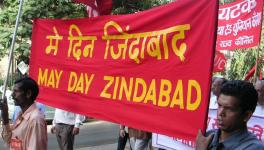
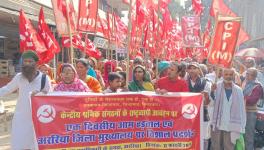
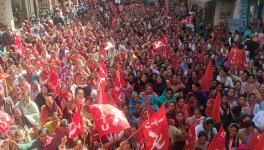
This is why large-scale protests, like the one on November 26, 2025, gained momentum In Delhi’s Jantar Mantar and factory towns from Kerala to Odisha, thousands of workers burned draft copies of the new codes and chanted anti-government slogans.
While the government argues that greater flexibility will create more jobs, the reality is that falling wages and rising insecurity reduce household spending, which ultimately slows economic growth.
The larger question, then, is what kind of development is India aiming for: a model built on low wages, high precarity, and maximised corporate profits, or one that upholds workers’ dignity and provides stable livelihoods?
Although presented as “reforms”, the labour codes in effect give the government sweeping authority, weaken worker protections, undermine unions, and disregard several recommendations from the Parliamentary Committee. As a result, India’s labour framework has shifted from a rights-based system to one centred on flexibility, where workers’ security depends not on firm legal guarantees but on future government notifications that may change at any time.
The November 26 protestors’ message was simple: bring back labour laws that actually protect workers. For, without job security, fair minimum wages, the right to unionise, and basic safety rules, millions of Indian workers will be pushed codes new will undo decades of progress.
The writers are independent researchers. The views are personal.
Get the latest reports & analysis with people's perspective on Protests, movements & deep analytical videos, discussions of the current affairs in your Telegram app. Subscribe to NewsClick's Telegram channel & get Real-Time updates on stories, as they get published on our website.