





Women, Identity and the Economics of Hatred

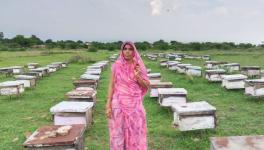
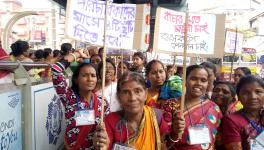
Representational image. | Image Courtesy: makaan.com
For the past several years, we have written about the normalisation of anti-Muslim prejudice in India and the ways in which it has gradually entered everyday social life. During recent fieldwork among migrant women workers in Delhi, however, we encountered another dimension of this transformation. What began as a study of migration and livelihoods unexpectedly became an investigation into how communal prejudice is reshaping the urban informal labour market.
One interview changed the direction of our enquiry. It was when one of the women we interviewed hesitated before telling us her real name. Only after the conversation had progressed for some time did she quietly admit that it was not the name she used while looking for work. Whenever she approached residential societies in search of employment as a domestic worker, she introduced herself by a false name. Her own name, she explained, closed doors before anyone spoke to her.
Another respondent narrated how the security guard simply refused to let her enter after asking her name. The prospective employer never met her. Nobody assessed whether she could cook, clean or care for children. The hiring decision had already been made at the entrance to the housing complex.
As our interviews accumulated, what initially appeared to be isolated incidents gradually revealed a disturbing pattern. Several respondents described being denied entry into residential societies altogether because they were Muslim. Some had stopped approaching particular neighbourhoods because they expected rejection. Others continued to conceal their identity in the hope of finding work.
The interviews also helped us understand how this discrimination has changed over time. The respondents pointed out that prejudice was never absent. Employers had always found ways of refusing Muslim domestic workers. What has changed, according to many respondents, is that instead of being rejected after meeting a prospective employer, many women now find themselves prevented from entering the society itself. The security guard, the Resident Welfare Association and the registration process have become the first gatekeepers of employment. The housing complex gate itself has become the first barrier to enter the labour market.
The workers’ coping strategies have also changed. Several women recalled that, in earlier years, some workers relied on assumed names and occasionally forged identity documents to obtain employment. That strategy has become increasingly difficult. Aadhaar-linked registration, police verification and biometric identification have narrowed the space for false documentation. Most respondents now register using their real identity because they have little alternative.
Yet, once they secure permission to enter a residential society through an employer, many continue to work under assumed names, constantly worrying and hoping that their religious identity will remain undiscovered. Discovery could mean immediate dismissal, in addition to humiliation and beratement.
These conversations forced us to rethink a basic economic concept, that of employment. A person is regarded as employable when they possess the ability to perform a job and are willing to work at the prevailing market wage. Our fieldwork suggests that, for many migrant Muslim women working and seeking work in the urban informal economy, these conditions are no longer sufficient. Employment increasingly requires a third condition, the ability to negotiate one's identity so as to ensure that the livelihood is not jeopardised.
Finding work now involves much more than looking for an employer. It requires concealing one’s name, managing suspicion, navigating verification procedures and living with the constant fear that one’s identity may become known. Before earning a single day’s wage, these women incur costs that many other workers do not. They spend longer searching for work, travel greater distances to residential complexes that are willing to employ them, and lose opportunities because entire neighbourhoods have become effectively inaccessible.
Employment does not end once a job is secured. Women working under assumed names describe the constant anxiety of ensuring that nothing in their speech, appearance or everyday interactions reveals their religious identity. The emotional labour of sustaining a false identity becomes an inseparable part of their working day. For some, the psychological burden is so overwhelming that they choose to withdraw from the labour market altogether rather than endure the humiliation and uncertainty associated with finding and keeping work.
These are not merely social humiliations or experiences of prejudice, these are psychosocial costs of securing employment. Hatred has raised the cost of entering and participating in the labour market by making identity itself something that must be managed. This is where the economics of discrimination begins.
The labour market fails to match workers with jobs according to their productivity. When access to employment is determined by religious identity rather than capability, that allocation mechanism breaks down. Workers who are perfectly capable of performing a job are excluded before their skills can even be assessed. The market ceases to reward productivity alone.
The consequences extend well beyond the women who are excluded.
Women who are denied employment or forced to accept fewer opportunities are pushed toward lower and more uncertain incomes, increasing the risk of poverty for households already living on the margins. Reduced earnings translate into lower expenditure on food, healthcare, education and other essentials. Across thousands of households, these individual losses accumulate into weaker consumer demand and slower economic activity.
At the same time, employers restrict their own access to a wider pool of capable workers, reducing the efficiency with which labour is allocated. The costs are, therefore, borne twice: first by the worker who loses opportunities for employment, and ultimately by an economy that fails to make full use of its available human resources.
One implication of these findings deserves particular attention. The mechanisms through which exclusion operates are highly decentralised and embedded in everyday interactions. Access to employment is mediated by security personnel, RWAs, employers and informal social networks, each exercising discretion at different stages of the hiring process. Because discrimination is dispersed across numerous actors rather than concentrated in a single institutional site, it becomes considerably more difficult to identify, regulate or remedy through conventional public policy. The cumulative effect of these seemingly routine decisions is the emergence of an informal labour market in which identity increasingly shapes access to employment.
The women we interviewed were not asking for sympathy or special treatment. They sought something far more fundamental: the opportunity to participate in the labour market on equal terms and to have their work evaluated on the basis of their abilities rather than their identities.
India’s ambition to become a global economic power rests on the productive participation of millions of workers whose labour keeps its cities running every day. Yet, our fieldwork suggests that, for many migrant Muslim women, employment no longer begins with the ability to work and the willingness to accept the prevailing wage. It begins with overcoming barriers that have little to do with skill.
The hidden economics of hatred will not always appear in labour force statistics, productivity estimates or national accounts. It will reveal itself in the opportunities denied before an interview takes place, in the jobs never applied for because rejection is anticipated, and in the invisible barriers that prevent capable workers from participating in the labour market on equal terms.
A labour market fulfils its purpose only when it rewards work, regardless of the identity. When names become more important than skills, exclusion becomes an economic failure. The costs are borne first by the women who are denied the dignity of work, but ultimately by an economy that chooses prejudice over productivity.
Shirin Akhter is Associate Professor at Zakir Husain Delhi College, University of Delhi. Dr. Ganita Bhupal is Associate Professor, Department of Economics, Rajdhani College, University of Delhi. The views are personal.
Get the latest reports & analysis with people's perspective on Protests, movements & deep analytical videos, discussions of the current affairs in your Telegram app. Subscribe to NewsClick's Telegram channel & get Real-Time updates on stories, as they get published on our website.