






RCEP: The ‘Price Competitiveness’ Logic is Misleading
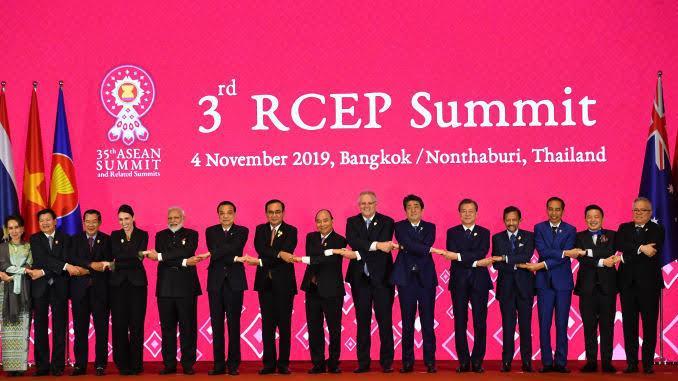
With the government being forced to withdraw from the RCEP (Regional Comprehensive Economic Partnership) agreement, an argument has arisen: if India is not competitive with other countries in producing a whole range of goods, which is why the producers of such goods within the country objected to the agreement in the first place, then why should it go on producing them?
And a related argument states: in protecting uncompetitive producers, the country is penalising consumers who would have otherwise accessed cheaper imported goods; is this not unfair?
The immediate and obvious answer to the first question (we shall come to the second one later) is that what appears as price competitiveness is usually reflective of an aggressive mercantilist strategy of capturing foreign markets that is pursued by States through the institution of subsidies or of an undervalued exchange rate.
This is true of agriculture (notably in Europe and the US, where enormous subsidies are given, though these countries are not part of the RCEP). It is also true of manufactured goods, especially from East Asia (which is a part of RCEP).
The concept of price competitiveness, therefore, is misleading; the apparent price competitiveness of any country is invariably ensconced within a plethora of fiscal and exchange rate policies within that country. Leaving Indian producers at the mercy of the “market” where they get outcompeted by cheaper imports because of the subsidies provided by foreign States, is thus clearly invidious.
In addition, however, there is a matter of principle involved which is often not discussed, though it should be. This relates to the fact that the usual free trade argument is based on a fraud: it assumes that all the economies, after they have opened themselves up for free trade, reach a full employment equilibrium (where all their resources including labour are fully employed). The free trade argument, in other words, precludes by assumption any possibility of free trade generating unemployment. This is an assumption that flies in the face of our experience of colonial deindustrialisation, which is the progenitor of our modern mass poverty.
If in the world as a whole (or within a group of countries bound by a free trade agreement), there existed some authority which could keep pushing aggregate demand upwards until all resources in all countries could get fully utilised (or up to a minimum level of the reserve army of labour, since full employment is impossible under capitalism for other well-known reasons), then there would be no unemployment (other than this minimum).
But there is no such authority to ensure the absence of a demand deficiency. Hence a level of unemployment (over and above the reserve army of labour) always exists. What a free trade agreement does is to shift this unemployment from some countries on to the shoulders of others.
Even if we assume that price competitiveness across countries is reflective entirely of labour productivity differences at the prevailing exchange rates and money wages, i.e. no dumping or subsidies are involved, it follows that free trade simply throws a whole lot of workers out of work in a low productivity country.
Two questions immediately arise: first, why can’t a low productivity country reduce its exchange rate until it becomes competitive and thereby get rid of unemployment? Since an exchange rate depreciation necessarily lowers the real wage rate, this amounts to suggesting that a lower productivity country should ensure that its real wages are suitably lowered, so that it becomes “competitive” and, therefore, avoids being saddled with mass unemployment.
This, however, is a mistaken idea: lower real wages in the country in question does not increase aggregate demand in all the countries taken together. Hence, a country undertaking exchange rate depreciation can reduce unemployment within its own boundaries only by increasing unemployment elsewhere, i.e. by “exporting” unemployment. Such “export”, however, will necessarily invite retaliation from other countries, so that all would be engaged in an exchange rate war that entails in effect a race to the bottom in respect of real wages. This, therefore, is no solution to the problem of free trade-generated unemployment within any country.
Besides, given the hegemony of finance that characterises today’s world, any exchange rate depreciation, or even an expectation of exchange rate depreciation (which a government concerned about free-trade-caused unemployment may be expected to undertake) would cause financial outflows that may be massively destabilising. An exchange rate depreciation, therefore, is hardly a way out of a situation of free-trade -generated unemployment.
Here the second question arises: what, it may be asked, is wrong in having high-cost producers displaced through free trade? Since they are high cost, they do not deserve to keep on producing. The answer here is simple: if those displaced through the closure of some activities could be absorbed elsewhere, in other activities, then such displacement need not cause much concern; but since this is not going to happen, there is absolutely no argument for signing a free trade agreement that would cause unemployment. In other words, a country must impose such trade restrictions as are necessary for employment; and the producers are perfectly justified in asking for such restrictions.
This may appear at first sight to go against the argument for “efficiency”, that production should occur only where it is most “efficiently” undertaken. But “efficiency” is a valid argument only in the following sense: if, with the full utilisation of all available resources, a country can gain access to a larger bundle of goods by specialising in the production only of certain goods and abandoning the production of others, which are obtained instead through imports, then it should do so.
The “efficiency” argument for free trade, in other words, presupposes the full utilisation of all resources. When this does not happen, to endorse the closure of a whole range of production activities on “efficiency” grounds is nonsensical.
But here the question would arise: why should the consumers be asked to pay more by shutting out cheap imports in order to sustain a group of high-cost local producers? This argument, which appears to have some pertinence at first sight, is based on an illicit distinction between producers and consumers.
It postulates that even when a group of producers (workers and peasants) lose their incomes because of cheap imports, there is another group of persons, the consumers, who will nonetheless be better off because of these cheap imports. Put differently, it presupposes that the incomes of these consumers do not get affected even when the incomes of producers go down because of free trade.
This, however, is erroneous. The reduction of incomes of producers also lowers the incomes of consumers, even of consumers who are distinct from those producers whose incomes go down in the first place. This is because of the macroeconomic consequences of the initial displacement of some producers. The example of colonial India will clarify the point.
The destruction of crafts owing to the import of cheaper machine-made manufactured goods from Britain, while it produced unemployment and mass poverty, appeared in the first instance to bring cheaper goods for the consumption of peasants, who were not directly affected by the displacement of artisans. But, over time, as the displaced artisans flooded the rural labour market, real wages fell and rents increased, which affected the incomes of the peasants themselves who were initially supposed to have been better off owing to cheaper imports. The income effects of deindustrialisation, therefore, spread in a ripple, ultimately affecting the working people as a whole. The only beneficiaries of colonial deindustrialisation are likely to have been the numerically tiny class of landlords, which had been created by the British as a bulwark of support for colonial rule.
Hence, support for a free trade agreement that creates unemployment, or lower incomes for the peasantry, cannot be justified under any circumstances; and the people were right to demand that the government should come out of the RCEP.
The current intellectual discourse in the country has become so hegemonised by capitalism, that the very idea of full employment appears to be an impossible dream. What is forgotten is that the erstwhile Soviet Union and the Eastern European socialist countries not only had full employment but were actually labour-scarce economies.
In fact, if a group of persons simply consume and invest what they produce amongst themselves, then there is no reason to expect any unemployment to arise.
One major reason for unemployment is that some in the group do not want to buy what others in the group produce, but instead want to buy what people outside the group produce, even though those outsiders do not wish to buy what people inside the group produce. Such unemployment, which the RCEP would have generated, must be prevented.
Get the latest reports & analysis with people's perspective on Protests, movements & deep analytical videos, discussions of the current affairs in your Telegram app. Subscribe to NewsClick's Telegram channel & get Real-Time updates on stories, as they get published on our website.