





Sonam Wangchuk’s Long Detention Tests Indian Democracy
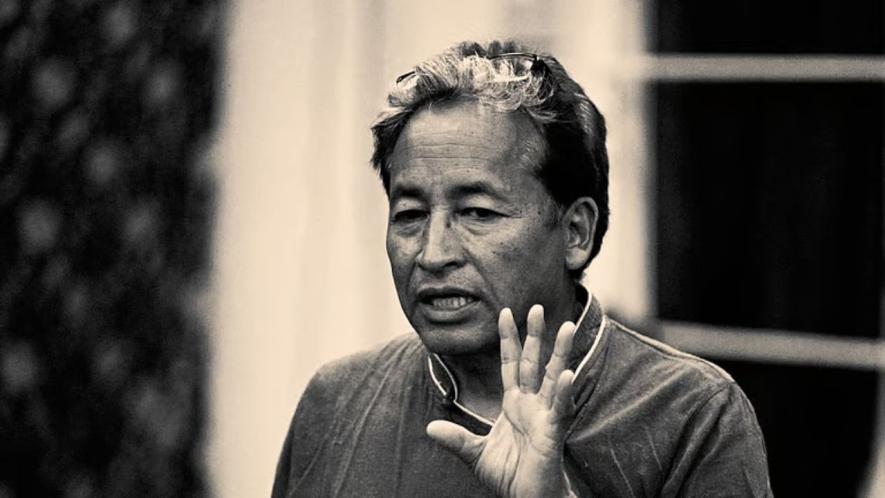
Renowned engineer, innovator, education reformer, and socio-environmental activist Sonam Wangchuk has been detained under the National Security Act (NSA) since September 26, 2025. Currently incarcerated in Jodhpur Central Jail, his detention has now extended to nearly 150 days (five months). On February 19, 2026, the Supreme Court heard a petition challenging his detention, directing the government to produce original recordings of his speeches and accurate translations.
Dismissing Wangchuk's prolonged imprisonment as merely a legal matter would be simplistic. This case transcends an individual; it probes the sensitivity of India's democracy. In a democratic setup, tension between power and dissent is natural, but when voices of disagreement are silenced through extended incarceration, it raises questions about the health of the democratic system. This is not just about one person's freedom; it is a litmus test for India's democratic sensitivity, tolerance, and openness to dialogue. For the Indian people, this is a moment for introspection—have we begun to equate dissent with treason, criticism with rebellion, and warnings with crime?
Mr. Wangchuk has consistently drawn the state's attention to issues of environment, education, and social concerns in border regions. In a geographically and culturally unique area like Ladakh, his role has been more than that of an activist; he has served as a bridge for dialogue between local society and the central government. Thus, the question of his prolonged detention goes beyond law and order. It raises important questions on the nature of relations between power and society.
Right to Dissent in Democracy
The first question pertains to the right to dissent in a democracy. Detaining someone who has dedicated their entire life to education, community development, and Ladakh, who has brought glory to the country by winning the Ramon Magsaysay Award, who demonstrated patriotism in Galwan, undertook fasts for the protection of Himalayan environment, and inspired millions of Indians, under a stringent preventive detention law like NSA for such a long period sends the wrong message. Dissent is not a crime. Labeling someone who peacefully demands from the state as 'anti-national' and imprisoning them weakens the soul of democracy. The Constitution grants freedom of expression as a fundamental right not so that citizens only praise the government, but so that they can also question it. Individuals like Sonam Wangchuk do not oppose power; they alert society—whether it's about Ladakh's environment, education reforms, or local autonomy. If such voices are confined to long-term imprisonment, it creates an atmosphere of fear and self-censorship in society. This is akin to imprisoning not just one person, but the collective civic consciousness.
Misuse of NSA
The second issue is the need to prevent the misuse of NSA. Although meant for preventive detention, NSA has been repeatedly used to suppress political dissent. Extraordinary laws like NSA should be used only in extraordinary circumstances. If every dissent is deemed a 'threat to national security,' both freedom of expression and democracy will be endangered.
Unheard Demands of Ladakh
The third issue is the ignored core demands of Ladakh. Sixth Schedule status, statehood, priority for locals in jobs – these demands are linked to the region's security, culture, and livelihoods. Mr. Wangchuk's journey began with disappointment with the existing education system, which he felt did not meet the needs of Ladakhi students. In 1988, along with other concerned students, he founded the Students' Educational and Cultural Movement of Ladakh (SECMOL), aimed at reforming government schools and making education more practical and relevant in the Ladakhi context. Recognizing the growing water crisis due to melting glaciers, Mr. Wangchuk developed the simple "Ice Stupa" technique. The ice stupas have earned international acclaim as a low-cost solution to water scarcity. Mr. Wangchuk was on a hunger strike in Leh from March 6, 2024, to March 26, 2024. His main demands were: grant Ladakh statehood under the Sixth Schedule, which provides special rights and protections to tribal areas; declare Ladakh an environmentally protected area; increase employment opportunities for Ladakh's youth; and preserve Ladakh's unique culture and language.
Imprisoning Sonam Wangchuk does not solve the problem. The sentiments of Ladakh's people should be addressed, not suppressed, especially since Ladakh is a strategically important border region.
Health and Humanity Concerns
The fourth question is about health and humanity. The Supreme Court itself expressed concern over his health. Is such prolonged preventive detention necessary for a person over fifty years old suffering from some chronic illnesses, who has previously undertaken fasts, and who had to be admitted to Jodhpur AIIMS due to health deterioration caused by contaminated jail water and adverse conditions? Isn't this against humanity?
Need for Peaceful Dialogue and Positive Resolution
Sonam Wangchuk has always supported peaceful protests. Following the Gandhian path, Mr. Wangchuk's movement has been based on fasts and peaceful marches from Leh to Delhi. Is imposing a harsh law like NSA on a person engaging in non-violent protest in line with democratic values? He is not just a political activist but an internationally acclaimed innovator and environmentalist. His demands as a climate warrior to save Ladakh's glaciers and its fragile ecosystem are connected to the future of the entire country, especially the Himalayas. His imprisonment means weakening the voice for Ladakh's ecological security. The Supreme Court has sought clarity from the government on whether there are sufficient grounds for his detention. The old adage goes, 'Justice delayed is justice denied.' Sonam Wangchuk's struggle is not just for Ladakh but a fight to balance freedom of expression and nature conservation in Indian democracy. An enlightened society must ensure that in the race for development, we do not lose our environmental guardians behind bars. This is the time for the Indian populace to adopt a clear and rational stance in favor of expression, dialogue, and tolerance—because democracy ultimately survives not through institutions, but through civic consciousness. The central government should immediately release Sonam Wangchuk and rectify its mistake. Sitting at the dialogue table with Ladakh is still possible. This would be best for the country's unity and dignity.
The writer is a senior journalist, columnist and multidisciplinary cultural commentator. The views expressed are personal.
Get the latest reports & analysis with people's perspective on Protests, movements & deep analytical videos, discussions of the current affairs in your Telegram app. Subscribe to NewsClick's Telegram channel & get Real-Time updates on stories, as they get published on our website.