





Vividh Bharati: The Public Broadcaster Private Media Cannot Replace
Image Courtesy: YouTube
In an age when entertainment is available with the swipe of a finger and algorithms seem to know what song we might want to hear next, there is something genuinely countercultural about tuning in to Vividh Bharati. Launched by All India Radio in 1957, Vividh Bharati has survived the arrival of television, satellite channels, FM radio, YouTube, music-streaming platforms and podcasts. More importantly, it has retained something that is increasingly difficult to find in today’s crowded media landscape, a fine balance between entertainment and information.
Yet this endurance deserves to be read against a broader political backdrop. Public broadcasting in India has faced sustained pressure over the decades from commercialisation imperatives, budget squeezes, and the gravitational pull of private media conglomerates that increasingly dominate the airwaves.
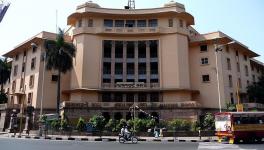
Prasar Bharati, the statutory body that oversees both Doordarshan and All India Radio, has repeatedly found itself at the centre of debates about editorial autonomy, funding adequacy, and the purpose of state-supported media in a democracy. In that context, Vividh Bharati represents something quietly subversive: a publicly funded service that has managed to stay genuinely popular without sensationalism, without partisan positioning, and without the frantic churn of breaking news cycles. It serves communities such as farmers, factory workers, students, and the elderly, who are rarely the target audience of premium streaming platforms. For those who believe public media still has a role to play in a fragmented information landscape, Vividh Bharati offers a live, working example worth defending.
The greatest strength of Vividh Bharati has always been its music. Hindi film songs naturally form the backbone of its programming, but what distinguishes the station is the way these songs are chosen and presented. One does not simply encounter an endless sequence of whatever happens to be trending. The listener may hear a Mohammed Rafi classic followed by Kishore Kumar, Lata Mangeshkar, Asha Bhosle, Mukesh or Manna Dey along with Arijit Singh, Sunidhi Chauhan and Sonu Nigam and then suddenly rediscover a beautiful but relatively forgotten song from a film that disappeared from public memory decades ago.
Songs are often connected through a theme, a composer, a lyricist, an actor, a particular period or even a musical idea. The familiar programmes continue to give Vividh Bharati its distinctive identity. Bhule Bisre Geet takes listeners back to melodies that might otherwise have faded from memory; Sangeet Sarita opens a window to the world of Indian classical music; Hawa Mahal keeps alive the tradition of radio plays; Jaimala maintains its special connection with members of the armed forces; while programmes such as Chhaya Geet and Inse Miliye add to a schedule that combines music, conversation, information and entertainment.
Equally remarkable is Vividh Bharati’s reach. While urban India has rapidly migrated toward streaming platforms and on-demand entertainment, radio continues to have a presence far beyond the metropolitan centres. Vividh Bharati still receives song requests and messages from listeners in small towns and the interiors of the country. The names and locations read out during request-based programmes themselves offer a fascinating glimpse of the geographical spread of its audience. A request may come from a large city, but the next could arrive from a small town or a distant district that rarely finds a place in mainstream entertainment discourse.
This continuing interaction also tells us something important about its steady listener base. These are not merely passive listeners accidentally encountering a radio frequency. Many consciously tune in, send requests, participate in programmes and maintain a relationship with the station over years, sometimes decades. In an era obsessed with clicks, views, likes and subscriber counts, there is something quietly impressive about such sustained loyalty.
Music, however, is only one part of the Vividh Bharati experience. Some programmes introduce listeners to Indian classical ragas through familiar compositions and film songs. For someone without formal training in classical music, discovering the raga underlying a familiar melody can open a window into an entirely different musical tradition. The same philosophy extends beyond music. Programmes featuring doctors and medical experts discuss common diseases, preventive healthcare and everyday health concerns in language accessible to ordinary listeners.
Over decades, its microphones have recorded conversations with some of India’s most celebrated actors, singers, composers, lyricists, writers and filmmakers. When these archival interviews are replayed, we hear much more than information. We hear the voices, pauses, humour and recollections of personalities from another era, often from a time when interviews were less hurried and conversations were allowed to unfold.
Importantly, Vividh Bharati is no longer dependent on the reach of the conventional radio set. It can also be accessed through Prasar Bharati's digital platforms, allowing listeners to tune in through their smartphones from virtually anywhere with an internet connection. The NewsOnAir app, in particular, brought together more than 240 All India Radio services for live streaming. According to the 2022 data, these streams were being accessed not only across India but in more than 85 countries around the world. Thus, someone who grew up listening to Vividh Bharati on a transistor or a radio set can now carry the same station in a pocket.
Perhaps that is why, more than six decades after it first went on air, Vividh Bharati continues to find listeners across generations and geographies. It has adapted to technology without surrendering its personality. And somewhere, in a metropolis, a small town or a distant corner of the country, a listener may still be waiting for the presenter to announce a familiar name, a familiar place and play the song he or she requested.
The writers are faculty at IIM Kashipur and IIT Mandi, respectively. The views are personal.
Get the latest reports & analysis with people's perspective on Protests, movements & deep analytical videos, discussions of the current affairs in your Telegram app. Subscribe to NewsClick's Telegram channel & get Real-Time updates on stories, as they get published on our website.