





West Bengal: Mamata’s Intervention in ED Raid on IPAC Sparks Political Firestorm
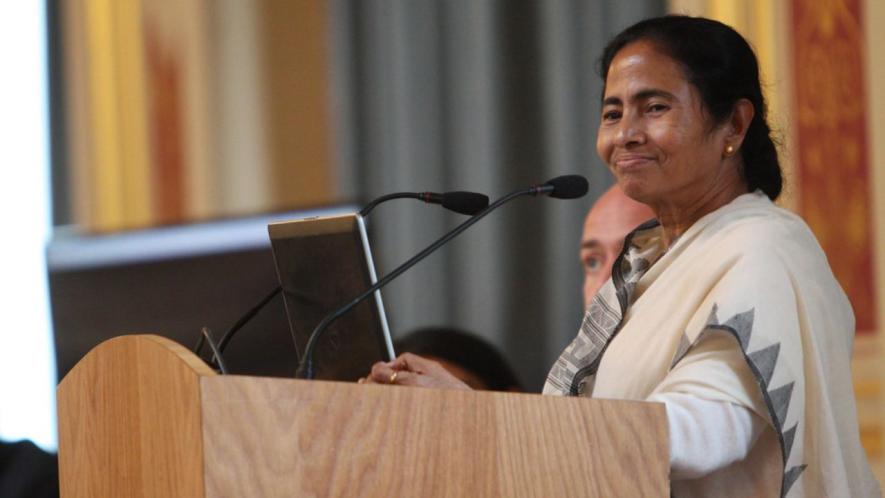
Image Courtesy: Flickr
Kolkata: The city was gripped by high political drama on Tuesday morning as the Enforcement Directorate (ED) launched raids on the offices of the Indian Political Action Committee (IPAC) in Sector V’s Godrej Waterside building, citing alleged links of its co-founder Prateek Jain with a coal scam. Simultaneous searches were carried out at Jain’s Loudon Street residence, marking yet another flashpoint in the fraught relationship between West Bengal’s ruling Trinamool Congress (TMC) regime and Central investigative agencies.
What transformed an otherwise routine agency operation into a spectacle was Chief Minister Mamata Banerjee’s sudden arrival at the IPAC office around 10 a.m., flanked by a large contingent of state and Kolkata police officers. Eyewitnesses alleged that laptops and documents were removed from the premises even as the raid was underway—an act the ED later described as “obstruction of duty.”
IPAC, co-founded by Prashant Kishor and Jain, has long been seen as the strategic nerve centre of TMC. Its proximity to the ruling regime has made it a lightning rod in Bengal’s political battles. By evening, ED sources indicated they may seek Calcutta High Court’s permission to file an FIR against the Chief Minister for interfering in the agency’s work.
Pattern of Confrontation
This is not the first confrontation between Mamata Banerjee and Central agencies. In February 2019, she had joined a sit-in to block a CBI raid at then Police Commissioner Rajib Kumar’s residence. That case remains unresolved, with Kumar now serving as West Bengal’s Director General of Police.
Observers note that Banerjee’s interventions often blur the line between political theatre and executive overreach. In her social media post later in the day, she accused Union Home Minister Amit Shah of attempting to seize TMC’s internal documents. “Is it the duty of the ED, Amit Shah, to collect the party’s hard disk, candidate list? The nasty, naughty Home Minister who cannot protect the country is taking away all my party documents,” she wrote, framing the raid as part of a broader Bharatiya Janata Party (BJP) strategy to undermine her party ahead of the Assembly elections.
The TMC leader sought to recast the raid not as a legal exercise but as a political conspiracy. By invoking voter list manipulation and surveillance, Banerjee positioned herself as the “defender of Bengal’s democratic process” against what she described as Delhi’s authoritarian encroachment.
A Ploy to Enforce Binary, Says CPI(M)
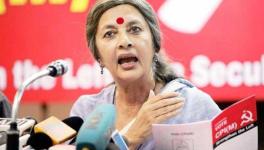
Within hours of the raid, CPI(M) state secretary Mohd Salim convened a press conference, condemning Banerjee’s intervention as a “dangerous precedent”. “This is not the first time she has taken the law into her own hands,” he said, recalling incidents from Bhawanipur police station to RG Kar Hospital, where the Chief Minister allegedly interfered in investigations.
Salim alleged that Banerjee’s nephew had a stake in IPAC, deepening the party’s entanglement with the firm.
He also criticised the ED for “failing to secure the raid site”, noting that “prior intimation had been given to both Banerjee and Jain, and that IPAC staff had been advised to work from home”. “The police were seen transferring documents into a TMC car. This is a blatant misuse of government machinery,” he charged.
Terming the episode a “ploy to enforce binary politics” ahead of the Assembly elections, Salim said such confrontation between TMC and BJP serve to polarise the electorate while sidelining substantive issues. “Even in cinema, scripts change with each release. Here, the same script is being replayed again and again,” he quipped, demanding immediate FIRs against Mamata, the state police, and Kolkata Police for obstructing central agency work.
The Politics of Raids
Raids by central agencies have become a recurring motif in Bengal’s political theatre. For BJP, which is ruling at the Centre, these serve as instruments to project corruption within the ruling regime, as also harass Opposition leaders. For Banerjee, these are seen as opportunities to dramatise defiance and consolidate her base by portraying herself as the victim of Delhi’s vendetta politics.
The spectacle of Banerjee personally intervening in raids reinforces her image as a combative leader who refuses to cede ground. Yet, critics argue that such actions erode institutional norms and set troubling precedents. When the head of a state government physically obstructs a Central agency, the line between political resistance and executive misconduct becomes dangerously blurred, they say.
In Bengal’s political landscape, repeated clashes between TMC and BJP often reduce the field to a polarised contest, leaving little space for alternative voices. For the Left, highlighting this binary is both a critique of Banerjee’s politics and a reminder of their own marginalisation in a state once dominated by their cadre.
Outsourcing Politics?
The controversy also raises questions about the role of IPAC in Bengal’s electoral machinery. Its influence in Bengal has been undeniable. From booth-level mobilisation to narrative framing, its strategies have shaped TMC’s electoral victories. Critics feel that reliance on a private entity for political planning raises grave concerns about transparency, accountability, and commercialisation of democracy.
Institutional Erosion and Public Perception
The incident also highlights the erosion of institutional boundaries. The use of state police to remove documents during a Central agency raid raises serious questions about the misuse of government machinery. If confirmed, it would represent a direct challenge to the federal structure, where state and Central agencies are expected to operate within defined jurisdictions.
Public perception, however, is shaped less by legal nuances and more by the spectacle. The Chief Minister’s dramatic intervention, her sharp words against Amit Shah, and Salim’s press conference all feed into a narrative of confrontation. For voters, the image of a Chief Minister storming into a raid site may evoke admiration for her defiance or concern about her disregard for law.
The Road Ahead
As Bengal heads into another election season, the stakes of such confrontations are high. For Banerjee, projecting defiance against Delhi’s institutions has long been a strategy to consolidate her base. For BJP, the raids are a means to spotlight alleged corruption and weaken her credibility. For the Left, incidents like these are opportunities to critique both sides and highlight the erosion of democratic norms.
The political impact is immediate: the raid has already become a talking point in Bengal’s charged atmosphere.
Conclusion
The January 8 raid at IPAC and Banerjee’s intervention encapsulate the volatile mix of law, politics, and spectacle that defines Bengal’s democracy today. It is a story not just of one Chief Minister’s defiance, but of a broader struggle over institutions, narratives, and electoral strategies.
For the TMC leader, the act reinforces her image as a fighter who refuses to bow to Delhi. For the Left, it is evidence of her disregard for norms and a reminder of the dangers of binary politics. For BJP, it gives ammunition to question her integrity.
Get the latest reports & analysis with people's perspective on Protests, movements & deep analytical videos, discussions of the current affairs in your Telegram app. Subscribe to NewsClick's Telegram channel & get Real-Time updates on stories, as they get published on our website.