





Amendments to Delhi’s Governance Retrograde and Regressive
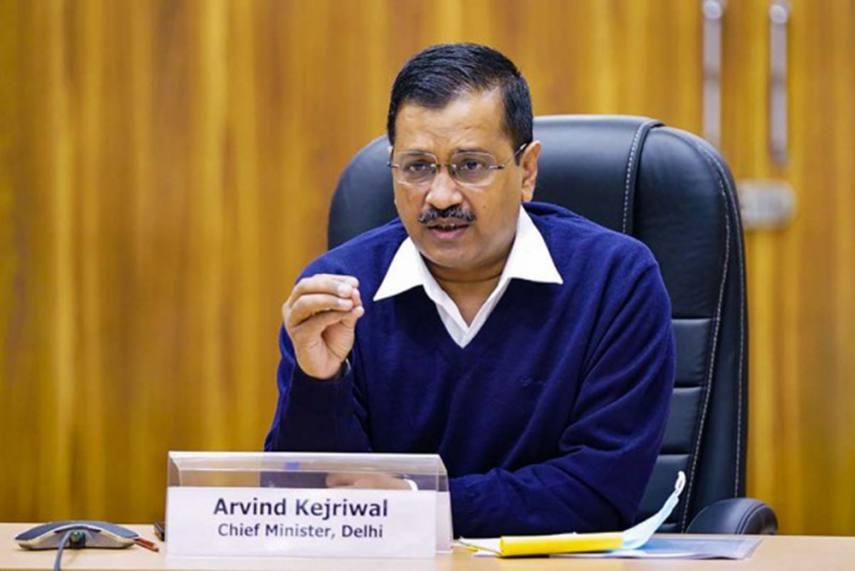
Image Courtesy: Outlook India
Little did Kirtee Bhai realise in one of the webinars that ‘Delhi’, to which he had referred as a ‘way of governance model’ for cities, will be robbed of its rights and transformed literally into a municipality. Kirtee Bhai is a member of the first urban commission constituted in 1986 and was making a comparison between Delhi and Mumbai metropolis, terming the former’s legislature as a better model for city governance.
Months later after this webinar, the central government passed an amendment to the GNCTD (Government of National Capital Delhi) Act of 1991, turning the Delhi city-state into an adjunct of the central government where even for trivial matters, the elected government will have to refer back to the appointed lieutenant governor (LG). The LG is appointed by the central government.
WHAT ARE THESE AMENDMENTS ABOUT?
It was not just the opposition parties, from the Left to Congress to regional parties in the parliament, who opposed these amendments. Even former civil servants decried the move of the central government. Nearly 80 former civil servants of the country released a statement against the amendments and termed the Centre’s move as one subordinating the executive powers of the elected government in Delhi.
The reason for placing the amendment bill in the parliament was stated in the statement of objects and reasons:
“to further define the responsibilities of the elected government and Lieutenant Governor (LG) in Delhi.”
In the guise of a Supreme Court order dated July 4, 2018, where the court had delved upon the subject of powers between the elected legislature and the LG, the central government said it was carrying forward the directions of the SC. This is however not true and is the inverse of the SC order.
The 2018 SC order came in the wake of an appeal by the Delhi government against the Delhi High Court order dated August 4, 2016, that ruled that the LG of Delhi exercised “complete control of all matters regarding National Capital Territory(NCT)) of Delhi.” The SC had set aside this verdict and while interpreting Article 239 AA on Delhi, which states, “The Council of Ministers shall be collectively responsible to the Legislative Assembly,” categorically said that “the Lieutenant Governor has not been entrusted with any independent decision-making power. He has to either act on the ‘aid and advice' of the Council of Ministers or he is bound to implement the decision taken by the President on a reference made by him.”
This observation was more than clear on matters pertaining to governance in Delhi. However, the central government moved by sheer political reasons in Delhi brought in an amendment to the GNCTD Act and reversed what the Supreme Court had highlighted. This enacted GNCTD (Amendment) Act 2021 strikes at the root of the principles of democratic governance and renders the democratic rights of the citizens of Delhi null.
There are four major effects that accrue from this amendment:
1. Government in Delhi means the lieutenant governor.
2. The elected legislative assembly of the Delhi state cannot pass any rule.
3. The Lok Sabha and in that matter, the central government for the moment will take the decision to even frame rules on behalf of the Delhi government. Section 33 of the act, which relates to “conduct of its business” states that the state legislature can enact rules “which shall not be inconsistent with the Rules of Procedure and Conduct of Business in the House of the People.” All-State legislatures have the right to frame their own rules; indeed, the rules of the Delhi Assembly are nearly identical to those of the UP Assembly, but here is a differential treatment.
4. On every move of the government, prior sanction of the LG will be sought by the elected government under the amended Section 44 of the GNCTD Act.
This literally means crippling the elected government and making it an adjunct of the Centre.
LONGSTANDING DEMAND NULLIFIED
Delhi has a long history of the demand for complete statehood. After independence, Delhi was classified as a Part C state with an appointed chief commissioner and an elected chief minister. Brahma Prakash, a leader of the Congress party, was the first chief minister of the Delhi Legislative Assembly. The state had control over major utilities like sanitation, water supply, etc., but not over police, public order and land. After the State Reorganisation Act in 1956, Delhi was classified as a Union Territory and its council of ministers and legislative assembly was dissolved. However, the pressure kept on mounting for a more people-oriented governance model. Hence, the Municipal Corporation of Delhi was established in 1957. There was widespread demand for Delhi to get statehood and more elected representatives.
The Delhi Metropolitan Council was formed in 1966 through an act of the parliament. The council had 56 directly elected councillors and five nominated. The post of lieutenant governor was also created. L K Advani, leader of the Jan Sangh was the Chairperson of the Delhi Metropolitan Council from 1967 to 1970. Interestingly, the predecessor of the Bharatiya Janata Party (BJP), the Jan Sangh was quite vocal in raising the demand for full statehood of Delhi.
After persistent demand for statehood and a legislative assembly, Delhi was made a state with the passing of the 69th amendment to the Constitution and the “Government of National Capital Territory Act, 1991” was enacted by the parliament. The Delhi Assembly was re-established and chief minister and council of ministers were reintroduced replacing the chief executive councillor and executive councillors.
The first Delhi Assembly got elected in 1993 and BJP won the elections. Interestingly, during the period of this assembly, three chief ministers were sworn in by the BJP. These include Madan Lal Khurana, Sahib Singh Verma and Sushma Swaraj from 1993-98. The BJP was vocal in raising the demand for full statehood even during this period. In 1998, the Congress won the elections and elected Sheila Dixit as the chief minister. For a 15-year-long stint, she remained the chief minister of Delhi from 1998 to 2013. Congress was not very vocal in raising the full statehood demand. In fact, Sheila Dixit had a working relationship with the Centre even when the BJP-led National Democratic Alliance (NDA) was in power, and kept the business going.
However, the demand for statehood did not vanish. In fact, the BJP-led NDA government at the Centre prepared a Draft Delhi Reorganisation Bill in 1998 that proposed full statehood for Delhi minus the NDMC (New Delhi Municipal Council) area. The bill proposed that subject of land and local government will be the jurisdiction of Delhi. In 2003, L K Advani, the then Deputy Prime Minister of India, tabled the State of Delhi Bill, 2003 and promised statehood with maximum autonomy for Delhi. The bill was moved to the standing committee and even Pranab Mukherjee, a member of the committee, suggested more powers for the Delhi government.
BJP’S VOLE FACE
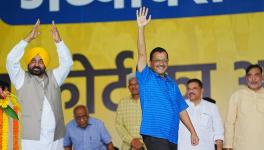
Since 2013, Arvind Kejriwal has been the chief minister of Delhi and there has been a consistent effort by the Centre to downplay the powers of the elected government. This new era, post 2014, the era of Narendra Modi-Amit Shah, is plundering all forms of democratic aspirations of the people and is not allowing any vent for the forces which are in dissent. This is a rule with a mediaeval-feudal mindset where the conqueror and vanquished relationship guides democratic governance institutions. It is not the citizenry concept, rather it is the “ruler-ruled” concept of governance, where the people must depend on the benevolence of the ruler. Any dissent will be and is taken as treason and there is no dearth of examples to substantiate all of this.
For the elected government, the dictum is to stifle them at the throat and paralyse their functioning. This is what is happening with Delhi’s elected government and the people at large.
HIGH TIME FOR A 4TH LIST
It is high time that we start discussing how our cities are to be governed. Delhi, though, a little different from other cities where a functional legislature model has been tried and succeeded to some extent.
Take for example, given the liberty to perform, one can find stark changes in the way institutions and utilities like education, health, mobility, water, electricity etc., can be governed. But all this has been part of the 74th Constitutional Amendment and under the 12th Schedule, 18 subjects were supposed to be transferred to the elected city governments in the country. But we know, not more than three to five subjects are universally under their ambit. A few of them, like in Delhi, where the city-state government got an opportunity to function, one can find the difference.
In such a scenario it is pertinent that a new demand for framing a 4th list apart from the Union, Concurrent and State List is done. And this list should be for the local bodies. There has to be a stark demarcation on the function and role of the local bodies with a fair amount of empowerment to them in terms of assets etc., to ensure that the people are able to govern themselves.
Else, what we are witnessing is an acute centralised rule of the “supreme leader” who loves even to inaugurate toilets in the cities. Let’s not even talk about the new central vista and a mansion for him being constructed at the expense of the public exchequer without realising the need for such an expenditure.
The changes brought in the Delhi governance model are retrogressive, decadent and smacks of obfuscating feudal mindset. These must be reversed.
(The author is the former Deputy Mayor of Shimla, Himachal Pradesh. Views expressed are personal)
Get the latest reports & analysis with people's perspective on Protests, movements & deep analytical videos, discussions of the current affairs in your Telegram app. Subscribe to NewsClick's Telegram channel & get Real-Time updates on stories, as they get published on our website.