





Deterrence or Vulnerability? Security Dilemma of Non-Nuclear States in Great Power Rivalry
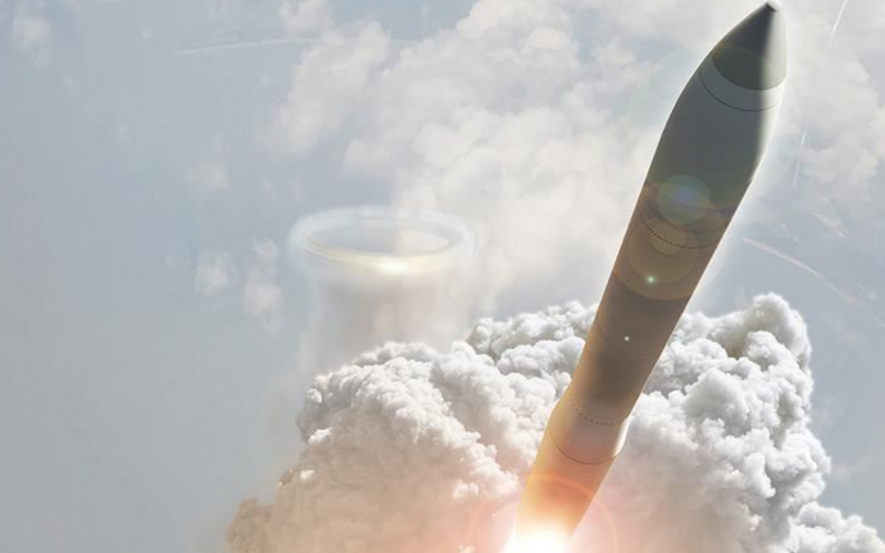
File Image
In international politics, power rarely speaks softly. It speaks through deterrence, coercion, and occasionally through war. The escalating confrontation in West Asia, today, in 2026, marked by direct military strikes involving Iran, Israel, and the United States, has once again exposed the harsh logic that governs the global security order. Beneath the tactical details of missile strikes, drone attacks, and military retaliation lies a deeper strategic question that resonates far beyond the region: what lessons will other states draw from this crisis about the relationship between power and survival?
For many governments observing the unfolding war, the issue is not merely regional politics but the fundamental structure of the international system itself. If military power remains the ultimate arbiter of political outcomes, then states without credible deterrent capabilities may find themselves dangerously exposed.
This dilemma has long occupied scholars of international relations. In an international system defined by anarchy, where no overarching authority can reliably enforce rules, states must ultimately rely on their own capabilities for survival. The structural logic of this system was famously articulated by the realist tradition of international thought, which emphasises that security competition emerges not necessarily from aggression but from uncertainty. Even defensive actions by one state can appear threatening to another, producing what political scientist Robert Jervis described as the “security dilemma”.
For decades, the global nuclear order attempted to mitigate this dilemma through institutional arrangements. The cornerstone of that order remains the Treaty on the Non‑Proliferation of Nuclear Weapons (NPT), signed in 1968, and now joined by nearly every country in the world. The treaty rests on a delicate political bargain: non-nuclear states agree not to pursue nuclear weapons, while nuclear-armed states commit to eventual disarmament and to facilitating peaceful nuclear technology.
The durability of this arrangement has been remarkable. Despite the destructive power of nuclear weapons and the strategic incentives that might encourage their spread, only nine states ultimately developed nuclear arsenals. Yet, the credibility of the non-proliferation regime has always depended on a crucial assumption: that states which refrain from acquiring nuclear weapons will not become strategically vulnerable because of that restraint. It is precisely this assumption that is increasingly under strain.
The global security environment is undergoing profound transformation. Military spending worldwide has surged to unprecedented levels, exceeding $2.4 trillion annually, according to data from the Stockholm International Peace Research Institute or SIPRI. Nuclear modernisation programmes are expanding simultaneously in the US, Russia, and China. Arms control agreements that once helped stabilise strategic competition are weakening, while geopolitical rivalry is intensifying across multiple regions—from Eastern Europe to the Indo-Pacific.
In such an environment, the strategic calculations of weaker states inevitably evolve.
History provides several cases that continue to shape how governments interpret the relationship between military capability and regime survival. The 2003 invasion of Iraq demonstrated that even states suspected of possessing weapons of mass destruction or WMDs could experience regime change through external intervention.
Libya’s decision in 2003 to abandon its nuclear and missile programmes was initially celebrated as a triumph of diplomacy, yet the collapse of Muammar Gaddafi’s regime during the NATO intervention of 2011 profoundly altered the strategic interpretation of that decision.
For policymakers concerned primarily with survival, such episodes generate what scholars sometimes call “strategic lesson drawing.” Governments observe past interventions and derive conclusions about what policies might protect them from similar outcomes.
Within this framework, the trajectory of North Korea occupies a central place in contemporary strategic debates. Despite decades of international sanctions and diplomatic isolation, North Korea has successfully developed nuclear weapons and long-range missile capabilities. Analysts estimate that the country now possesses several dozen nuclear warheads along with intercontinental ballistic missiles capable of reaching distant continents. While tensions on the Korean Peninsula remain acute, the presence of nuclear weapons has fundamentally altered the strategic calculus surrounding the regime’s survival. Direct military intervention aimed at regime change is widely viewed as prohibitively risky.
For many observers, the contrast between Libya and North Korea illustrates what might be described as the deterrence credibility paradox: states that abandon nuclear ambitions may remain vulnerable, while those that acquire nuclear weapons may gain a degree of strategic immunity.
The ongoing confrontation involving Iran further sharpens this dilemma. Military strikes targeting Iranian nuclear infrastructure have been justified by their proponents as preventive measures designed to halt Tehran’s progress toward potential nuclear weapons capability. Yet, the strategic signals transmitted by such actions may prove far more ambiguous.
For Iranian policymakers, and for other governments observing the conflict, the lesson may be interpreted in precisely the opposite direction. If nuclear infrastructure becomes a target of military action before a country crosses the nuclear threshold, the incentive to develop a credible deterrent may only intensify.
This dynamic is particularly dangerous because it can generate what strategists describe as a proliferation cascade. When one state moves toward nuclear capability, its regional rivals may feel compelled to consider similar options. Over time, this process can transform regional security environments into multi-actor nuclear landscapes marked by heightened instability.
West Asia already exhibits many of the conditions associated with such dynamics. The ongoing conflict has disrupted shipping through the Strait of Hormuz, a maritime corridor through which roughly one-fifth of global oil trade flows. Energy markets have reacted sharply, demonstrating how regional security crises involving nuclear-threshold states can produce immediate global economic consequences.
Similar strategic pressures exist elsewhere. In East Asia, North Korea’s expanding nuclear arsenal has intensified debates in South Korea and Japan about the credibility of extended deterrence. In South Asia, nuclear deterrence continues to shape the strategic relationship between India and Pakistan, where both states maintain evolving nuclear doctrines and delivery systems.
Yet nuclear weapons remain profoundly paradoxical instruments of security. These may deter large-scale invasion, but cannot guarantee comprehensive national stability. Nuclear arsenals do not resolve economic crises, internal political unrest, cyber warfare, or asymmetric conflict. Instead, these create a precarious equilibrium in which catastrophic escalation becomes the ultimate constraint on political decision-making.
In this sense, nuclear weapons function less as tools of victory than as mechanisms of mutual vulnerability. The long-term stability of the global nuclear order, therefore, depends not only on the restraint of non-nuclear states but also on the conduct of nuclear powers themselves. If major powers increasingly rely on unilateral military action, coercive sanctions, and selective interpretations of international law, the credibility of the non-proliferation regime will inevitably erode.
When weaker states conclude that international norms cannot reliably protect their sovereignty, the logic of self-help becomes difficult to resist. The challenge confronting the international community is, therefore, not merely technical or legal but fundamentally political.
Preventing nuclear proliferation requires restoring confidence that adherence to global norms enhances security rather than undermines it. This demands renewed commitment to arms control, credible security assurances, and strategic restraint by the world’s most powerful states.
The tragedy of nuclear weapons lies in the peculiar form of stability these produce. These deter war not by guaranteeing safety but by making the consequences of conflict unthinkably catastrophic. As the current crisis in West Asia demonstrates, the global nuclear order stands at a fragile crossroads. If the perception spreads that nuclear weapons are the only reliable shield against external intervention, the world may gradually drift toward a far more dangerous equilibrium.
Avoiding that future will require something that has historically proven scarce in international politics: power exercised with restraint and security extended beyond the narrow circle of the nuclear armed. Because in a world where the weak feel permanently insecure, the stability of the entire system ultimately comes into question.
Zahoor Ahmed Mir is Assistant Professor at Akal University, Punjab. He holds PhD from Jamia Millia Islamia and writes on international relations, geopolitics, nuclear security, etc. [email protected]. Hilal Ramzan is Assistant Professor and Head of the Social Science Department at Akal University, Bhatinda. He writes on geopolitics, soft-power, international relations etc. [email protected]. The views are personal.
Get the latest reports & analysis with people's perspective on Protests, movements & deep analytical videos, discussions of the current affairs in your Telegram app. Subscribe to NewsClick's Telegram channel & get Real-Time updates on stories, as they get published on our website.