





Is Trump’s Habitual Power Projection Pushing World Toward Catastrophe?
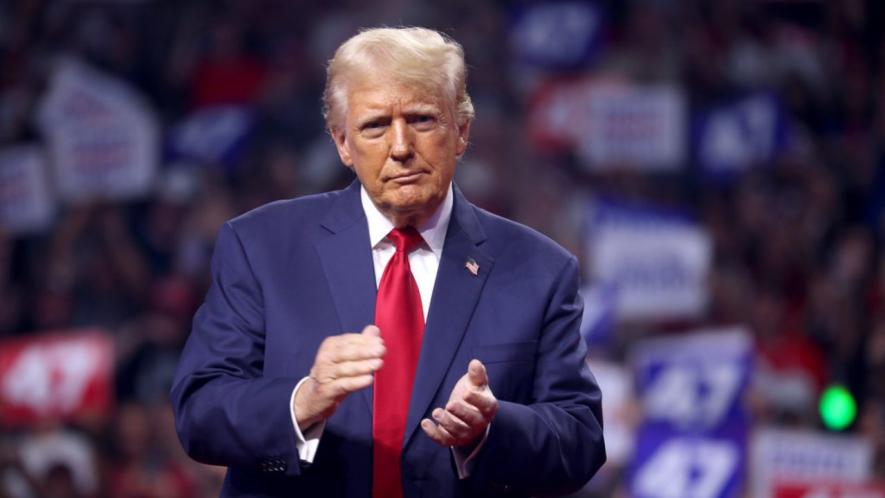
Image Courtesy: Flickr
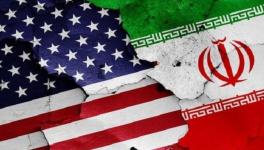
The United States, under President Donald Trump, has plunged the world into yet another avoidable catastrophe. On February 28, 2026, joint US and Israeli forces launched ‘Operation Epic Fury’, a massive aerial campaign against Iran that has already claimed thousands of lives, devastated civilian infrastructure, and shaken global economies.
This war—illegal under international law and widely criticised for its human consequences—appears to lack a single convincing justification. Rather than responding to an immediate threat, it increasingly looks like an act of power projection driven by geopolitical ambition and political ego. Nations are being pushed into instability, billions of people are facing economic uncertainty, and innocent lives are being lost on a staggering scale. The American public and the international community must demand an urgent end to this dangerous escalation.
The Iraq Playbook Returns
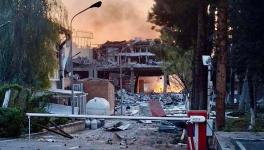
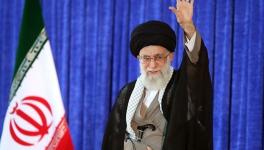
The strikes began with overwhelming force. US missiles, drones, and Israeli fighter jets targeted Tehran, Isfahan, Qom, and other cities, striking nuclear sites, missile facilities, radar installations, and military command centres. Reports indicate that Iran’s Supreme Leader Ali Khamenei was killed during the opening phase of the campaign. Within days the operation expanded to weaken Iran’s navy, ballistic missile arsenal, and air defence. President Trump declared the objective clear: destroy Iran’s capabilities, prevent it from acquiring nuclear weapons, and force regime change, demanding “unconditional surrender.”
Yet, no credible evidence has been presented of an imminent Iranian attack on the US that would justify a pre-emptive war. Official arguments focus on Iran’s missile program and support for regional proxies, but these issues have existed for decades without triggering a full-scale invasion.
Diplomacy—however fragile—was still ongoing until mid-February, before it was abruptly replaced by military escalation. Several European allies have criticised the action as a breach of international law and declined to participate. Russia has reportedly begun sharing targeting intelligence with Iran, while China is watching the situation closely. The shifting justifications for the war—imminent threat, nuclear prevention, or missile destruction—echo the rhetoric used before the 2003 Iraq War, where exaggerated claims led to a conflict that destabilized an entire region for decades.
The Human Cost of a Needless War
The human consequences are already severe. Civilian deaths in Iran exceeded 1,300 within the first week alone. One of the most disturbing incidents involved a strike on an elementary school in Minab in southern Iran, reportedly killing many innocent children. Human rights organisations estimate that the total death toll from the conflict and related unrest could eventually reach into the tens of thousands. Millions have been displaced as infrastructure and residential areas suffer heavy damage.
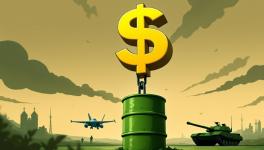
Iran has responded with missile and drone attacks across several countries in the region, sharply raising tensions. The conflict has also disrupted the Strait of Hormuz, a critical corridor for global energy shipments. Tankers have been stranded and oil prices have surged. As energy costs rise, the economic effects are spreading worldwide. Higher oil prices are increasing the cost of food, transportation, and goods across the globe, with poorer countries bearing the greatest burden.
Khamenei’s Ideological Opposition to Nukes
Another central justification for the war has been Iran’s alleged pursuit of nuclear weapons. However, there is no public evidence that Iran had made a final political decision to build a bomb. Inspectors from the International Atomic Energy Agency (IAEA) repeatedly stated that they could not confirm the existence of an active Iranian nuclear weapons program. Iran has long argued that its nuclear activities are intended for peaceful purposes such as energy production. Iran’s late Supreme Leader Ali Khamenei repeatedly declared nuclear weapons to be religiously forbidden and issued a fatwa banning their development.
Some geopolitical analysts argue, however, that Iran’s restraint may have weakened its strategic position. Countries that already possess nuclear weapons—such as North Korea or Pakistan—are rarely attacked directly because nuclear deterrence significantly raises the risks of escalation. Whether this argument is correct or not, it illustrates the complex strategic logic surrounding nuclear weapons in international politics.
A Legally Indefensible War
Legally, the war raises serious concerns. Under the United Nations Charter, military action against a sovereign state is permitted only in self-defence after an armed attack or with authorisation from the United Nations Security Council. Neither condition appears to have been met.
Numerous international law experts, European leaders, and governments across Asia and Africa have described the campaign as a grave violation of international law.
Within the US, constitutional questions are also emerging. The authority to declare war rests with Congress, and the War Powers Resolution of 1973 requires the president to notify Congress within 48 hours and limits the duration of unauthorized military operations. Critics argue that these safeguards have been effectively bypassed.
World Pays the Economic Price
The conflict’s economic consequences are already spreading worldwide. Military strikes and retaliatory attacks have intensified instability in the Persian Gulf, while the disruption of shipping routes has pushed oil prices above $100 per barrel. Rising energy costs are increasing the price of food, fuel, and consumer goods across the globe. Countries that rely heavily on imported energy face growing economic pressure, while millions of ordinary people confront higher living costs and financial uncertainty.
Protests and Dissent Across US
The war has triggered growing opposition inside the US. On social media and in public demonstrations, citizens are demanding congressional oversight and investigations into potential war crimes. Public frustration has spilled into everyday spaces, with several political figures linked to the Trump administration reportedly facing protests or confrontations from citizens in restaurants and public venues.
Polling suggests that a majority of Americans oppose the conflict. Demonstrations have taken place in cities such as Washington D.C., New York, and Los Angeles, while civil society groups have condemned the war as illegal and unnecessary. Opposition has also emerged within parts of Trump’s political base, where critics argue that the war contradicts the “America First” principle of avoiding costly foreign entanglements.
Tensions Escalate
International reactions have been cautious and increasingly critical. European governments have expressed concern and declined to join the campaign. Russia has reportedly begun sharing intelligence with Iran, and China continues to monitor the situation closely. Protests have taken place in several countries, with many governments warning that the conflict threatens global stability and energy security. Across Asia, Africa, and West Asia, leaders fear that continued escalation could draw more nations into a wider confrontation.
Was US ‘Dragged’ Into Conflict by Israel?
Amid the conflict, persistent rumours have circulated suggesting that Israel may have used compromising information linked to the late financier Jeffrey Epstein to pressure the Trump administration into military action. While these claims remain unproven, the speculation reflects a broader concern about the role of foreign influence, lobbying power, and opaque political networks in shaping major foreign-policy decisions.
World must wake up NOW!
The international community must act quickly to prevent further escalation. The United Nations General Assembly and Security Council should initiate urgent debates and investigations. The US Congress must exercise its authority under the War Powers Act to review and potentially halt the conflict. Countries, such as India, which rely heavily on energy imports and seek regional stability, have strong incentives to encourage diplomatic solutions. If the world remains silent, this conflict risks becoming another devastating and prolonged war whose consequences extend far beyond West Asia.
True security cannot be achieved through bombs and missiles alone. It requires restraint, diplomacy, and respect for international law. The world is watching in alarm as this conflict unfolds. Unless decisive steps toward de-escalation are taken soon, the human and economic toll could grow far beyond what anyone initially imagined.
The writer is a senior journalist, columnist, multidisciplinary cultural commentator and a research scholar in economics. The views are personal.
Get the latest reports & analysis with people's perspective on Protests, movements & deep analytical videos, discussions of the current affairs in your Telegram app. Subscribe to NewsClick's Telegram channel & get Real-Time updates on stories, as they get published on our website.