





EEFI Demands Withdrawal of SHANTI Bill, Terms it ‘Seismic Attack’ on Nuclear Framework
New Delhi: Terming the SHANTI Bill as “a seismic and dangerous attack on India’s nuclear framework”, the Electricity Employees Federation of India (EEFI) has called for its immediate withdrawal.
In a press statement, EEFI said the Bill “removes important safety and accountability safeguards while opening the door to large-scale private and foreign participation in the most sensitive and hazardous energy sector. “
The EEFI also demanded “full and transparent public hearings, with representation of all major stakeholders, as well as independent technical experts, before placing any changes to the Acts related to nuclear power.”
The Sustainable Harnessing and Advancement of Nuclear Energy for Transforming India (SHANTI) Bill, 2025, was tabled in the Lok Sabha on December 15, 2025, seeking to repeal and replace the Atomic Energy Act, 1962 and the Civil Liability for Nuclear Damage Act, 2010.
Read the full EEFI press statement below:
Press Release
16 December 2025
Immediately Withdraw the SHANTI Bill
Stop Jeopardizing the Sovereignty and Security of People of India
The Central Government has tabled the Sustainable Harnessing and Advancement of Nuclear Energy for Transforming India (SHANTI) Bill, 2025 in the Lok Sabha on 15 December 2025, seeking to repeal and replace the Atomic Energy Act, 1962 and the Civil Liability for Nuclear Damage Act, 2010. This is certainly a seismic and dangerous attack on India’s nuclear framework; the Bill removes important safety and accountability safeguards while opening the door to large-scale private and foreign participation in the most sensitive and hazardous energy sector.
We demand its immediate withdrawal and the conduct of full and transparent public hearings, with representation of all major stakeholders, as well as independent technical experts, before placing any changes to the Acts related to nuclear power.
The SHANTI Bill repeals the Atomic Energy Act, 1962, which kept civilian nuclear activity under strict public control, and replaces it with a profit-oriented framework that opens large parts of the nuclear value chain to private players under a licensing framework. The Bill’s clauses enabling private operation of reactors, fuel-cycle activities, and large foreign investment create a precedent of privatisation of risk while socialising catastrophic liability.
By repealing the Civil Liability for Nuclear Damage Act, the SHANTI Bill removes the operator’s statutory “right of recourse” against suppliers, a provision in the existing CLND Act that made such recourse possible in certain circumstances. Removing operator recourse to suppliers shifts the economic burden of defective supply and systemic failures away from private firms that profit from supplying and selling of reactors. Where the operator cannot sue suppliers for latent defects, the victims and the State are forced to shoulder the consequences.
Further, the Bill continues an operator liability framework capped at 300 million Special Drawing Rights, or approximately ₹3,690 crore, which is manifestly inadequate for a major nuclear accident and is orders of magnitude smaller than internationally comparable standards. The CLND Act had created a strict liability regime focused on victim compensation and contained mechanisms, including limited operator recourse, to ensure accountability. The SHANTI Bill substantially weakens this framework.
Actually, since the enactment of the CLND Act, multinational nuclear reactor suppliers, particularly Westinghouse of the United States and Areva (subsequently taken over by EDF of France), have refused to supply reactors or invest in India’s nuclear sector. During President Obama’s 2015 visit to India, the Modi government attempted to circumvent this issue by proposing an Indian Nuclear Insurance Pool as part of a liability risk management framework. However, this initiative failed to satisfy foreign suppliers, who continued to insist on dilution of India’s liability law. Notably, even the existing liability cap under the CLNDA was not based on any technical or economic assessment of nuclear accident costs. Instead, it was a political compromise arising from the Indo - US Civil Nuclear Agreement of 2008, designed primarily to accommodate foreign suppliers.
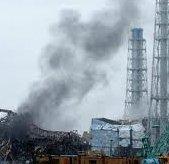
The scale of potential nuclear damage far exceeds these limits: the Fukushima disaster in Japan has already cost over $200 billion. Despite this, international suppliers continue to demand total immunity, seeking to confine liability exclusively to the operator and within rigid monetary and time limits.
The Bill proposes a new regulatory structure and an independent nuclear safety authority on paper; however, the same legislative instrument simultaneously creates promotional and facilitative mechanisms for private entry. Any clause that allows executive appointment of regulators without Parliamentary confirmation, fixed tenure protection, transparent selection processes, or financial independence undermines the democratic obligations of the State. If promotional functions remain with the same ministry, or if promotional bodies are allowed to sit on regulatory boards, conflicts of interest are embedded in the statute. Provisions that limit the disclosure of safety reports, vendor certificates, or environmental monitoring data on vague “national security” grounds may be used to withhold vital information from affected communities.
EEFI demands that any new statute must define a truly independent Nuclear Safety Authority, with statutory tenure protection for its members, an open and transparent selection process based on technical qualifications, budgetary autonomy, a clear prohibition on dual roles between promotion and regulation, and mandatory public disclosure of safety audits and emergency preparedness plans.
The Bill explicitly promotes Small Modular Reactors (SMRs) and fast-track licensing to accelerate deployment. While the Bill does not expressly exempt SMRs from environmental clearance, it empowers the Central Government to prescribe licensing and approval procedures through rules, thereby creating scope for dilution of environmental impact assessment (EIA) and public hearing requirements. Any clause that bypasses statutory EIA, public hearings, coastal regulation norms, or land acquisition safeguards for SMRs is unacceptable. Smaller reactor size does not eliminate risks related to radioactive waste, siting, or cooling water requirements. EEFI demands that SMR deployment must comply with full EIA and social impact assessment processes, transparent siting criteria, and documented emergency preparedness plans, with no exemptions from public consultation.
The Bill frames private participation as a key economic objective but does not appear to strengthen worker safety, job security, or local grievance redress mechanisms in the context of increased commercialisation. The clauses licensing contractors and suppliers do not contain strict labour standards, union recognition rights, mandatory safety training provisions, or enforceable penalties for violations. The Bill’s current approach prioritises commercial procurement without embedding worker safeguards. There is no clear statutory mechanism guaranteeing long-term medical monitoring, livelihood restoration, or community compensation in the event of industrial or nuclear incidents.
EEFI supports the safe and responsible expansion of low-carbon energy. However, a nuclear law that privatises profits and socialises catastrophic risks, strips away established principles of liability and accountability, weakens independent regulation, and dilutes environmental and labour protections is unacceptable in a democratic republic. The SHANTI Bill, in its present form, would institutionalise legal structures that favour suppliers and investors over victims, workers, and local communities, without adequate Parliamentary scrutiny. The Bill vests sweeping discretion in the executive to permit foreign participation and technology transfer without mandatory Parliamentary approval, raising serious concerns regarding accountability, sovereignty, and long-term strategic control.
We therefore demand the immediate withdrawal of the SHANTI Bill and its referral to a Parliamentary Select Committee with mandatory hearings involving major stakeholders, trade unions, public health and environmental experts and State governments.
We further demand the reinstatement and strengthening of strict liability provisions, restoration of the operator’s right of recourse in defined circumstances, and removal of any inadequate insurance or liability caps; statutory guarantees of regulatory independence, including secure tenure, transparent selection, and budgetary autonomy, with a clear firewall between promotional and safety functions; and the enforcement of mandatory EIAs, robust worker protections, lifelong medical surveillance, and clear compensation frameworks for workers and communities. Finally, we demand explicit Parliamentary oversight over any foreign technology or ownership participation and all strategic fuel-cycle activities.
The EEFI calls Electricity Employees, Engineers and people in general to come on to the street and protest this draconian Bill – Our priority is Safety and Sovereignty of our Country!
Issued by
Sudip Dutta
General Secretary, EEFI
Get the latest reports & analysis with people's perspective on Protests, movements & deep analytical videos, discussions of the current affairs in your Telegram app. Subscribe to NewsClick's Telegram channel & get Real-Time updates on stories, as they get published on our website.