





Earth Day: Affirm Conservation as Resistance

Representational use only.
Happy Earth Day, fellow earthlings! It’s a mystery how spaceship Earth has survived another century, pumped up on fossil fuels, forests burned, water wasted and half the world population living in poverty, without fresh water, air or nutrition. When we hear corporate overlords say, “Great Reset”, “Fourth Industrial Revolution”, and “corporates for Earth”, we must shiver. For it only heralds a new Great Game to privatise nature.
The theme of Earth Day this year is “Invest in our planet”. It, too, is in line with the corporate-fuelled agenda. But that’s no surprise. Giant multinational corporations and countries in the developed world want us to spend our hard-earned resources to clean up their messes. The developing world faces 9/10th of the world’s climate burden, while Wall Street was busy last year, setting up a Natural Asset fund and management companies to profit from climate control. The sustainability reports filed by corporate giants sound lovely, and their commitments to net-zero are being promoted as an ultimate solution. But remember, plastic and aluminium were once the green thing to do too, and look where that got us.
The reality is, green targets are an economy in which every dollar or rupee we spend goes into the pockets of the corporate sector—and the clean-up cost is ours, too. Here is how: Recently, while travelling in Lahaul, Himachal Pradesh, I found a unique agricultural practice still in action. People use agri-chemicals to a limited extent. They still allow their land to rest for six months, restoring soil fertility. But that should not surprise us either: we know that the 50 least developed countries contribute less than 1% to global carbon emissions.
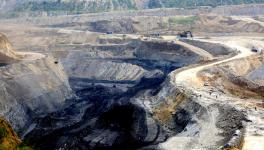
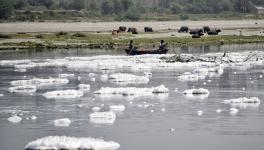
Then I also saw trash, mostly empty packets of packaged food items, all over Himachal Pradesh. Untreated sewage was entering rivers and streams in every town, village and city. When it rains, the residue from quarries, and untreated municipal waste, overflow into the nearest river. In short, no place is safe from corporate-generated filth in India or the world. And who is destroying the natural environment every day except the corporations that own the mines, even our garbage? Agreed, even though the scales vary widely, the developing countries, too, must play a role in climate change mitigation. For, the more the earth grows warmer, the more inequalities will rise. Yes, we in India need to leave our rivers, glaciers and remote areas alone to rejuvenate.
Or else, considering the scale at which anthropogenic activities are fuelling environmental disasters, there won’t be many natural sites left if collective action to mitigate rising global temperature is ignored. That is why the Kyoto Protocol spoke of “common but differential responsibility” in 1997. And, whatever happened to the $100 billion promised to the developing world at COP-21 in France? Not even half its target has been reached. Perhaps it is a result of the move away from mitigating and adapting strategies to individual role in environment and climate change. The systemic issues are relegated to the sidelines, since developing nations bear the burden of climate change and need fuel resources to propel their rise out of poverty.
Let us talk about how we can invest in “our earth” in this context. The way ahead is not to appease “industry leaders” because their leadership has landed us in the climate crisis in the first place. Their loyalties are, supposedly, to their shareholders and profit, not the planet. If anything, we should insist corporations fulfil their environmental “conservation” missions by not hurting it more. We must insist that corporations set more ambitious targets to reduce emissions. We need more changes: Nature doesn’t charge for water, so why do corporates get to make us pay for a bottle of it? In other words, sure, invest in the planet, but not through Wall Street.
Indeed, the corporate-led model of growth and development has forced us to believe that individuals can achieve a better earth while collective action is disincentivised.
Now on, let us use our money—our government’s money, the taxpayers’ money, citizen’s money—to buy and promote the local economy. We must get our governments to invest time, effort, and money to restore our local environments. Go ahead and plant a tree, dig a pond, eat local produce and meat, but collective action is the only way forward to see change globally. To get governments to disinvest from planet-killing businesses, we need peoples’ advocacy campaigns that demand accountability from those who pollute the earth most. We inherit the earth as a commons. So we must disempower corporate tyranny over food, water, and natural resources. This can only be done by promoting local decentralised systems and climate-friendly development models.
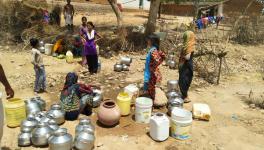
The next big investment is into water and seeds. To save water does not mean using less water at homes. It means helping regenerate water while remembering that the developing countries are striving to cover greater populations with access to clean water. If we want to limit domestic water consumption, we have to plan water waste-free homes and local water projects, not retro-fit them decades later. We have to do collective work for water and energy security. And a crucial aspect of this is keeping water out of private hands.
Today, what the planet needs most is a political investment. We have to ensure corporations do not get control over our planet. We must resist this. One example of resistance would be to have a pollution tax. The Himachal Pradesh and Uttarakhand governments impose a “green cess” on polluters, especially those who manufacture plastic and bottle “soft” drinks. The entire clean-up cost of picking up after these industries must also be recovered from those who run polluting factories and generate polluting waste. Corporations that manufacture food items need to use bio-degradable packaging. We cannot afford to contaminate the upper courses of rivers, just like the overwhelming pollution downstream from industry, agriculture, and domestic waste.
We need to invest in taking a technological leap, devising ways to promote green policies for eco-sensitive areas. Agriculture needs to be at the forefront of this policy. Sustainable agriculture is the way to rejuvenate damaged land and water systems. We need to join with the earth. If not, the capitalist industrial empire will drive us all into extinction, killing humanity even before the planet dies.
The author is an independent agri-policy analyst and writer and former director, policy and outreach at NSAI. The views are personal.
Get the latest reports & analysis with people's perspective on Protests, movements & deep analytical videos, discussions of the current affairs in your Telegram app. Subscribe to NewsClick's Telegram channel & get Real-Time updates on stories, as they get published on our website.